
BoykoNapier, PLLC

  • Home
  • Practice Areas
    • Family Law / Divorce
      • Divorce
        • Contested vs. Uncontested Divorce
        • Separation Agreements
        • Spousal Support / Alimony
      • Child Custody, Visitation and Support
      • Adoption
      • Modification of Orders
      • Protective Orders
      • Premarital and Postmarital Agreements
      • Annulments
      • Qualified Domestic Relations Orders
      • Relocation Custody Cases
      • Grandparent and Third-Party Custodial Rights
    • Mediation: Divorce, Custody, Support
    • Criminal Defense / Traffic Defense
      • DUI / DWI, Driving Under the Influence
      • Drug Possession and Drug Distribution
      • Assault and Battery / Malicious Wounding
      • Larceny and Embezzlement
      • Reckless Driving
      • Juvenile Criminal Defense
      • Traffic Violations and License Suspensions
      • Expungement
  • Attorneys
    • Marc A. Boyko
    • Mary A. Napier
    • J. Ryan Ferry
    • Wallace “Woody” Gram
    • Mary C. Heffley, Paralegal
  • About Us
    • Why Choose Us
    • Fees and Costs
  • Blog
    • Resources
  • Contact

Call: 804-658-3418

Coronavirus: FAQs for Virginia Divorce and Child Custody Cases

March 28, 2020 By Marc Leave a Comment

Corona Virus Legal
Courtesy of nursingschoolsnearme.com/ via flickr.com license link

We hope this is a once in a lifetime scenario: schools are closed, daycare facilities are closed, businesses are laying people off and closing their doors. The list goes on. 

It is difficult to navigate this uncertain and unprecedented situation; there are more questions than answers.  In this post we briefly address a few questions that we have been receiving for ongoing divorce and child custody cases.

  • Q: Will my scheduled hearing be canceled?
    • As our society continues to work towards containing the spread, the Virginia Supreme Court has ordered circuit and district courts to continue non-essential/non-emergent hearings. Most cases set between between now and April 26 will be rescheduled–including most divorce and child custody/visitation matters*. 
    • *Emergency custody hearings, abuse and neglect cases, and protective orders may continue to be heard.  Here is a link to the Supreme Court’s Order, which you should review. We strongly advise you to check with your jurisdiction to verify the status of your case.
    • If you already have an attorney, reach out to them; if you do not, we would recommend speaking with an experienced divorce and family law attorney regarding your specific circumstances.
  • Q: How can I resolve disputes that arise before the Courts will hear my case?
    • This is a very common concern, and a difficult question.  The short answer is: compromise.  We are all in unfamiliar territory, and we should work towards fair and reasonable resolutions whenever possible.  Use the Golden-Rule and remember that how you handle disputes right now can help/hurt your cause if you ultimately end up in front of a judge down the line.
    • It is also important to note that courts are technically open, despite hearing limited cases during this “shutdown”.  You may still be permitted to file pleadings/motions with the Court in order to take steps towards judicial relief.  You should check the current protocol in your jurisdiction and also speak with an attorney to determine how best to proceed.
  • Q: Since school is technically over until next semester, should our summer visitation schedule start immediately?
    • Another common, complicated question without a clear answer, unless somehow your Order is very specific regarding what should happen if school lets out early (unlikely). 
    • Again, this is unfamiliar territory.  Visitation language is not constructed to account for unknown and unexpected catastrophes, and as such there is likely to be valid arguments on both sides of this question.
    • As noted above, if you can reach a fair compromise, great.  Communicate with each other; co-parent.
  • Q: I am the primary custodian for my child.  Should I keep my child at home and deny visitation to the other parent until the coronavirus crisis passes?
    • We cannot advise our clients to disregard an existing Court Order and we reiterate how important communication and co-parenting is at this juncture.
    • Both parents should recognize the value of limiting exchanges/transportation for their children to maintain social distancing and minimize exposure.  Additionally, both parties should be considerate of unique circumstances that might heighten the risks (one parent’s immune-deficiency, for example).
    • That being said, the crisis should not necessarily be viewed as a means of withholding contact from the other parent.  Again, it is important to practice reasonable judgment and work towards a mutual resolution. 

If you would like to speak with an attorney to address questions about your case, please give BoykoNapier a call today at 804-658-3418, or you can contact us via email.

Filed Under: Child Custody, Divorce, Family Law Tagged With: Child Custody, coronavirus, Divorce Questions, Virginia Courts, Virginia Divorce Lawyer

Coronavirus: The Impact on Child / Spousal Support Obligations in Virginia

March 24, 2020 By Marc Leave a Comment

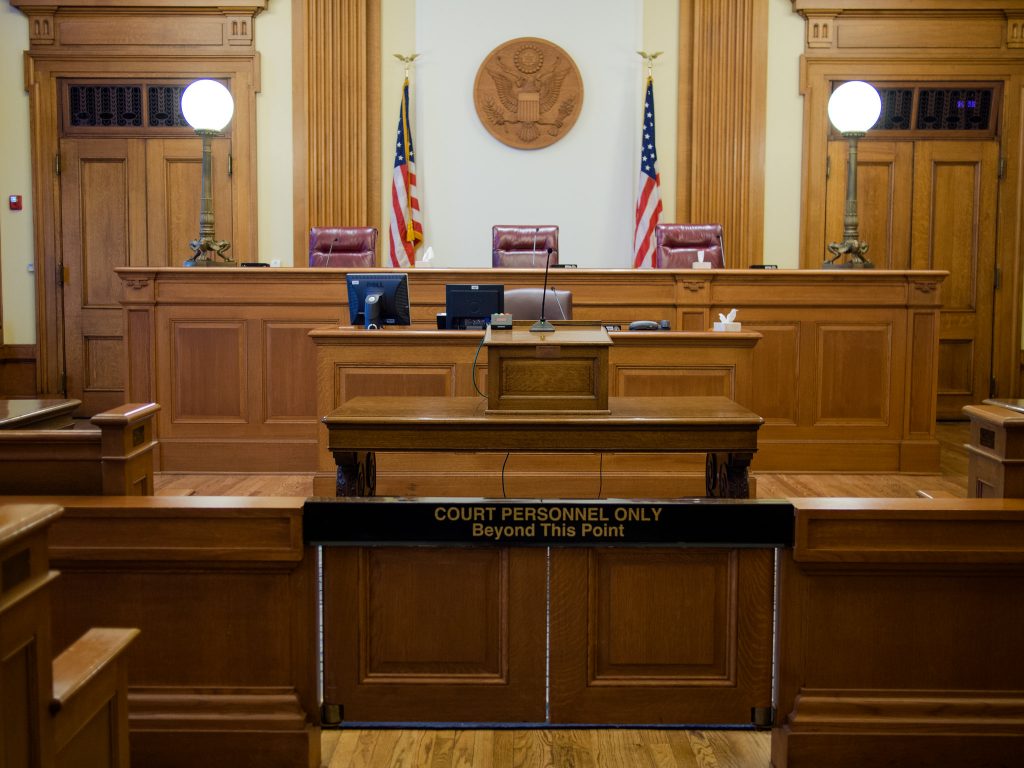
Empty Courthouse
Courtesy of Karen Neoh via flickr.com license link

Coronavirus (COVID-19) has brought an unprecedented and uncertain situation to our doorstep.  The rapid spread of this dangerous virus has resulted in illness and death for many Virginians.  Governor Northam’s most recent Executive Order has imposed more substantial personal and professional restrictions as we all strive to “flatten the curve” and limit infection.

While we are not here to comment on the personal health/safety issues at stake, we did want to share some thoughts regarding how this new normal is impacting a lot of our clients.  For this brief post, we will focus on the issue of court-ordered child and spousal support.

As we have already seen, layoffs abound, and many Virginians will experience a dramatic reduction in income.  Hopefully, this will be a short-term problem.  However, with the Courts being temporarily closed to non-essential causes, many of our clients have concerns over how to address their Support Order, so here are a few quick thoughts:

  • For all persons who have lost their income or are experiencing a significant income reduction:
    • It may be wise to attempt to find new employment and to apply for unemployment benefits, if you qualify. 
    • Keep track of all efforts to find new employment: maintain copies of written and email applications and any relevant correspondence with potential employers; keep a journal or spreadsheet with the names of companies that you’ve applied for and the dates of each application.  
    • Speak with the opposing party: given the court closure, as well as the likelihood that this crisis will impact everyone, the quickest avenue to relief may be through mutual agreement.*
    • File a Motion to Amend**.  Whether you are the payor (seeking to reduce the support obligation), or the payee (seeking to increase the support obligation), you should consider filing a Motion to Amend Support with the appropriate Juvenile or Circuit Court.  It is important to note that there may be a substantial delay in your ability to file in light of the ongoing crisis.
    • Speak to an attorney. An experienced divorce and family law attorney can help you explore all options so that you can determine the best avenue(s) to pursue.
  • For the PAYOR:
    • We cannot advise clients to disregard an existing spousal or child support order.
    • If you are the payor and cannot pay due to financial constraints, we would recommend that you make every effort to pay what you can (do your best to comply using income/financial resources available to you) until your ordinary income resumes or you are able to obtain a modification.** 
    • Making efforts to find employment/seek unemployment benefits and making partial support payments may help you avoid a contempt finding.

*Even if you are able to reach an “agreement” with the opposing party regarding temporary modifications to the terms contained in your support order, it may still be critical to have your agreement formalized in a new order or formal written agreement.  It would be wise to discuss any agreement that you reach with an attorney.

**If you have a spousal support obligation that is considered “non-modifiable”, you may not be able to seek modification from the Court and should speak with an attorney regarding available options.

If you would like to speak with an experienced divorce and family law attorney regarding your child or spousal support obligation, please contact BoykoNapier at (804) 658-3418, or you can reach us via email.

Filed Under: Child Support, Divorce, Family Law Tagged With: Child Support, coronavirus, Spousal Support, Support Attorney, Support Modification, Virginia Divorce Lawyer

Difficulties in Divorce: Dealing with Retirement Accounts

May 5, 2014 By Marc Leave a Comment

Richmond highway
Courtesy of jeff horne via flickr.com
license link

Any Virginia Divorce Lawyer will tell you that the first consultation with a potential client is a difficult task.  Going through a divorce is a painstaking process, especially when the parties have significant marital assets and/or debts to distribute.

One of the most common headaches is figuring out how to divide retirement accounts.  Most people are exceedingly frustrated to learn that they might have to fork over a portion of their retirement to their ex-spouse (the frustration boils if their spouse is the one seeking a divorce).   We thought it would be appropriate to answer a few FAQs.

What portion of your retirement account does your spouse get under Virginia law?

As with most things, it depends.  Only the “marital” portion of a retirement account is subject to division and distribution by a Judge.  Generally speaking, the marital portion of your retirement account is the amount of your contributions from the date of your marriage to the date of your separation (appreciation/depreciation of that amount is typically considered as well).  However, what your spouse actually gets really depends on the other circumstances of your case.

Are there ways to avoid giving your spouse a portion of your account?

In many cases, yes!  There are several ways to potentially avoid splitting up a retirement account.  A couple of common examples:

  • Even if you have a retirement account with marital assets that is subject to distribution by the Court, so too might your spouse.  His or her accounts might offset or exceed your own.  If that is the case, you might not have to divide up the retirement account in your name.
  • You may have other assets that could offset the retirement, or you might be able to assume marital debts to make up the difference.

What is a QDRO?

A QDRO (qualified domestic relations order) is a Court Order that divides up a retirement account.  Once the order is signed by a Virginia Judge, it is usually forwarded to the company holding the retirement assets.  Ordinarily, that company will review the QDRO and, once it is approved, they will divide the retirement funds into two accounts, one for each spouse.  For more information, look at our QDRO Page.

Can the Court split up a Pension Plan?

Yes.  The Court can also order the division of pension plans and military retirement accounts.  Typically this is done with a QDRO, resulting in a portion of the account holder’s monthly payment being diverted to their ex-spouse.

If you are going through a divorce in Virginia and have retirement assets, it is important to speak with a experienced divorce attorney for specific advice.  There are ways to protect your interests and the right divorce lawyer can help.  At BoykoNapier, our attorneys have experienced dealing with complex marital retirement issues.  Call us at (804) 658-3418, or contact us via email to discuss your case today.  We handle cases throughout Central Virginia, including Richmond, Chesterfield, Henrico, Hanover and the surrounding localities.


Related Posts Plugin for WordPress, Blogger...

Filed Under: Family Law Tagged With: Divorce, Family Law, marital assets, QDRO, retirement accounts, Virginia Divorce Lawyer

Call Us: (804) 658-3418

Subscribe to Blog via Email

Enter your email address to subscribe to this blog and receive notifications of new posts by email.

Recent Posts

  • BoykoNapier Attorneys Selected as Superlawyers
  • Virginia Divorce: Living Separately in the Same House
  • Virginia Divorce: Separation Agreements instead of Litigation

Categories

  • Child Custody
  • Child Support
  • Client Concerns
  • Criminal Law
  • Divorce
  • Family Law
  • Firm News
  • Holiday
  • Personal Injury
  • Uncategorized
  • Wills

Pages

  • Family Law
  • Criminal Defense
  • Personal Injury
  • Archive Page
  • Company Profile
  • Contact Us

Call Us: (804) 658-3418

Office Address:
5807 Staples Mill Road
Richmond, Virginia 23228
Phone: (804) 658-3418
Fax: (804) 658-3441

Social

  • View BoykoNapier’s profile on Facebook
  • View @boykonapier’s profile on Twitter
Google+
Disclaimer

Copyright © 2026 BoykoNapier, PLLC, all rights reserved