
BoykoNapier, PLLC

  • Home
  • Practice Areas
    • Family Law / Divorce
      • Divorce
        • Contested vs. Uncontested Divorce
        • Separation Agreements
        • Spousal Support / Alimony
      • Child Custody, Visitation and Support
      • Adoption
      • Modification of Orders
      • Protective Orders
      • Premarital and Postmarital Agreements
      • Annulments
      • Qualified Domestic Relations Orders
      • Relocation Custody Cases
      • Grandparent and Third-Party Custodial Rights
    • Mediation: Divorce, Custody, Support
    • Criminal Defense / Traffic Defense
      • DUI / DWI, Driving Under the Influence
      • Drug Possession and Drug Distribution
      • Assault and Battery / Malicious Wounding
      • Larceny and Embezzlement
      • Reckless Driving
      • Juvenile Criminal Defense
      • Traffic Violations and License Suspensions
      • Expungement
  • Attorneys
    • Marc A. Boyko
    • Mary A. Napier
    • J. Ryan Ferry
    • Wallace “Woody” Gram
    • Mary C. Heffley, Paralegal
  • About Us
    • Why Choose Us
    • Fees and Costs
  • Blog
    • Resources
  • Contact

Call: 804-658-3418

Halloween Safety Tips from BoykoNapier

October 31, 2014 By Marc Leave a Comment

Kids in costume
Courtesy of liz west via flickr.com
license link

Happy Halloween everyone!  We hope you have a truly spooktacular evening.  Here are a few safety tips to keep in mind:

Travel in Groups

Trick-or-treating alone is dangerous.  Plus, hanging out with your friends and family is more fun!

Travel with Adults

It is important to make sure your children are properly supervised tonight.

Be Careful on the Roads

It is important to be extra cautious behind the wheel tonight.  There will lots of little kids running around, perhaps not paying attention to the traffic on the roads.

Don’t Drink and Drive

This rule is of course applicable to each and every night of the year.  However, Halloween is a particularly dangerous night to drink and drive due to the large number of pedestrians in the roadway.

Don’t Eat it All

Save some candy.  If you have too much, you can always bring some by our office!

Here are some additional points from the Chesterfield County Police Department.

HAVE FUN and BE SAFE!

*The attorneys at BoykoNapier handle divorce, family law and criminal defense matters throughout Central Virginia, including Richmond, Henrico, Chesterfield, Hanover and the surrounding localities.  If you or a loved one are in need of legal advice, give BoykoNapier a call today at (804) 658-3418, or contact us online.

Filed Under: Holiday Tagged With: Chesterfield, Drunk Driving, Halloween, Parenting

Sentencing Hearings in Virginia Criminal Cases

July 2, 2013 By Marc Leave a Comment

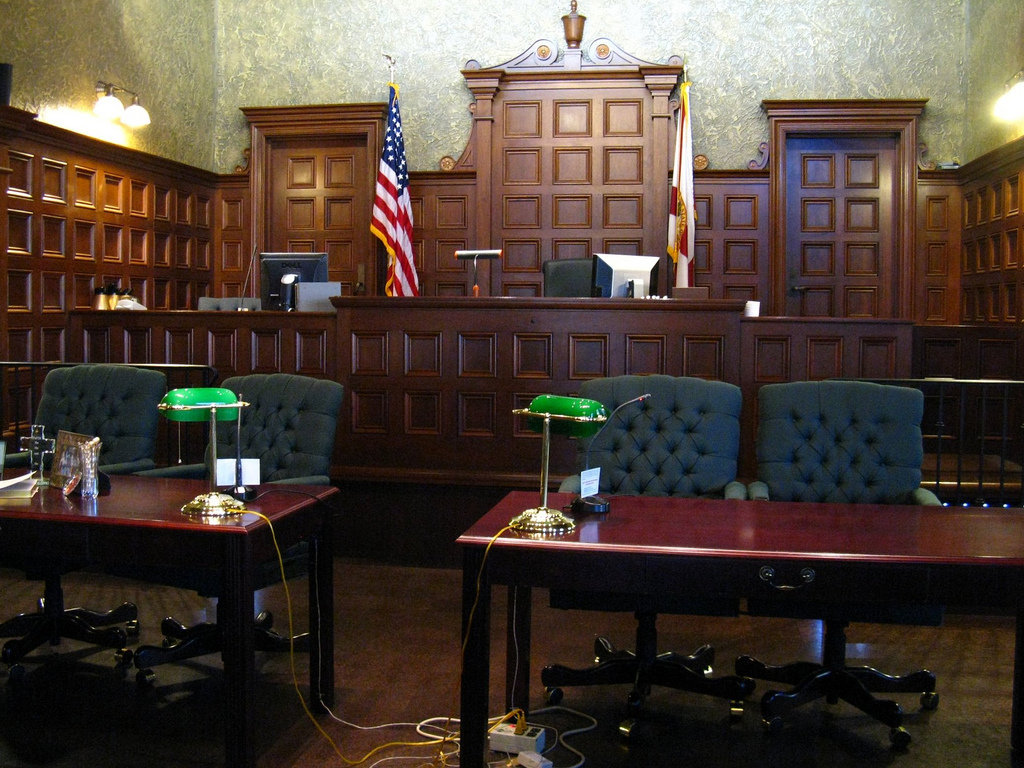
Courtroom
Courtesy of srqpix via flickr.com

In Virginia, once a Defendant has been found guilty of a criminal charge, whether by a Judge or Jury, the trial will proceed with a sentencing hearing (i.e. the punishment phase).  During this hearing, both sides–the Commonwealth and the Defense–are permitted to present evidence and argument before the Court makes a final ruling.

Evidentiary Phase:

  • Witnesses for the Commonwealth:

    • Quite frequently, particularly in situations of violence, the Commonwealth’s Attorney will call the victim and/or the victim’s family to the stand to testify about the impact of Defendant’s actions—a.k.a. “Victim Impact Statements”.
    • The Commonwealth may also call other witnesses—these could include other individuals who may have been impacted by the crime involved, or perhaps individuals who can lay foundation for a restitution award.
  • Witnesses for the Defense:

    • The Defense attorney’s job in the sentencing phase is primarily referred to as “mitigation”–i.e. to lessen the severity of the situation.  The Defense may choose to call family members of the Defendant, or even the Defendant himself, to establish the emotional and economic impact on the family, as well as the nature of Defendant’s character.
    • It may also be appropriate to call witnesses to speak about any physical or mental illnesses (including addictions) the Defendant suffers from.   This may be done in conjunction with a request for a sentencing alternative–i.e. a treatment program for mental illness, addiction, or both.
  • Documents for the Commonwealth:

    • The Commonwealth will certainly be introducing the Defendant’s criminal record, which is one of the primary items that the Court will use in determining the punishment. The Commonwealth may also introduce additional documents, including photographs of injuries (if applicable) and evidence of restitution (i.e. medical bills) that they will ask the Defendant to pay.
  • Documents for the Defense:

    • The Defense will often introduce mitigating evidence through documents. Here are some common types:
      • Character Letters–from friends, family, employers, co-workers, members of the clergy, etc.
      • Evidence of restitution payments (i.e. receipts/canceled checks)
      • Evidence of community involvement/community service
      • Medical and psychological evaluations
      • Certificates of completion of character building courses–anger management, shoplifter’s prevention, etc.
      • Apology letters
      • Evaluation Reports or letters related to Sentencing Alternatives–i.e. documentation showing the treatment programs that will accept Defendant
        • Note: In Central Virginia (i.e. Richmond, Henrico, Chesterfield, Hanover), there are a variety of programs that most Judges will consider–it is important to speak with your attorney to find out what programs you might qualify for.
  • Felony cases:

    • Virginia Sentencing Guidelines
      • The Court will receive sentencing guidelines if the Defendant has been convicted of a felony.
      • The “guidelines” are a suggested sentencing range that the Court will consider in determining an appropriate term of incarceration. The guidelines are calculated using a variety of factors, most notably the nature of the current conviction and the criminal history of the Defendant.  The guidelines are not mandatory–the Court can choose to deviate from them as the circumstances may warrant.
      • Your attorney should review the sentencing guidelines with you prior to the sentencing hearing so that you are aware of their impact on the Court’s decision.
    • Pre-Sentence Reports
      • In felony cases, the Court will usually receive a comprehensive analysis of the Defendant in what is referred to as a “pre-sentence report”.
      • This report is designed to provide the Court and the parties with a historical overview of the Defendant’s background—including his family history, mental health issues (if applicable), socioeconomic information, details regarding the current offense and the Defendant’s criminal record.

Argument Phase:

Once the witnesses and evidence have been presented by both the prosecution and defense, the Court will permit time for each attorney to argue their proposed disposition. The amount of time necessary for this phase will depend largely on the complexity and the seriousness of the charge.  You can expect both sides to comment on the evidence and witness testimony, the nature of the present charge and the sentencing guidelines.  As is noted above, it is also common for the Defendant to request an alternative to incarceration–a residential drug treatment program, for example.

At the conclusion of the argument phase, the Judge will render a decision.   The Defendant will have options regarding appeal if he or she is not satisfied with the outcome.

If you have any additional questions about sentencing hearings, or any other criminal defense related inquiries, please contact BoykoNapier to speak with one of our experienced attorneys.  We can be reached via phone at (804) 658-3418, or via email.


Filed Under: Criminal Law Tagged With: Chesterfield, Criminal Law, Felony, Hanover, Henrico, Pre-Sentence Report, Richmond, Sentencing, Sentencing Guidelines, Treatment Programs, Virginia

Have a Pending Civil or Criminal Case in Virginia? Check your Case Status Online

April 16, 2013 By Marc Leave a Comment

Computer Keyboard
Courtesy of ericnvntr via flickr.com

In Virginia, Courts across the Commonwealth have made it relatively easy to go online with your computer, tablet or smart phone and check the status of your pending criminal, civil, or divorce case.   The amount of information provided depends on the type of case and the particular Court, but will usually include the Court dates, case numbers, filing dates, offense dates and arrest dates (if applicable).  In some cases, the attorney’s names and the final disposition will also be posted online.

Follow these simple steps to find your online case information:

  • Go to the Virginia Court’s Website: www.courts.va.state.us.
  • On the left sidebar, click on the tab labeled “Case Status and Information”, which should bring you here.
  • Circuit Court (i.e. Divorce, or Felony Charge that has already been before the Grand Jury for certification or indictment):
    • Click on “Case Information” under the heading for Circuit Court, which should bring you here.
    • Use the drop-down menu to select the Court where your case is pending (i.e. Hanover, Richmond City).
    • Once you have selected the right Court, click “Begin”.
    • On the next page, beneath the words “Main Menu” you have the option to select “Criminal” or “Civil” – select the appropriate option.
    • Then type in the name of the person you are searching for (unless you choose to search via case number) and click the search button.
    • On the next page, if there are cases related to the name, you should see a list of cases.  Once you find the case you are looking for, you can click on the case number on the left which should reveal the online information for that particular matter.
  • General District Court (i.e. most misdemeanor criminal and traffic charges):
    • Click on “Case Information” under the heading for General District Court, which should bring you here.
    • Read the Terms and Conditions of Use and type in the Numbers or Characters as requested in order to enter the database.
    • Once inside, on the left sidebar, select the appropriate Court from the drop-down menu.
    • After you have selected the right Court, click on the type of search you want to perform (i.e. Name search in a Traffic/Criminal matter).
    • If you have selected the name search, the new page will prompt you to enter the name of the party.
    • Once the name is entered, a list of relevant cases should appear.

There are a few caveats:

  • If your case is pending in Juvenile Court you will not be able to access any case information online.
  • If your case is pending in a Court that does not post information online (i.e. Henrico County Circuit Court and Chesterfield County Circuit Court do not provide online case information at the present time) you won’t be able to take advantage of this feature.
  • Do not rely solely on the online case information; due to the nature of this database, information may be incorrect or outdated.  Accordingly, you should Contact the Court directly to verify important information.

Once you have reviewed the online case information, it might also be wise to go back to the Virginia Court’s Website and browse around for a while.  Who knows, you might just stumble upon some useful information for your case!

For additional information, contact an experienced attorney at BoykoNapier, PLLC—call (804)658-3418 or contact us via email for assistance.

Filed Under: Client Concerns Tagged With: Chesterfield, Civil Cases, Criminal Law, Divorce, Family Law, Felony, Hanover, Henrico, Misdemeanor, Richmond, Virginia

Difficulties in Divorce: The Tale of Two Households

March 3, 2013 By Marc Leave a Comment

Virginia Capital Building
Courtesy of JoeDuck via flickr.com

The price of separation can be one of the largest hurdles couples face during a divorce.  Figuring out how to afford the operation costs of two different households is no easy task.    Once the “marital residence” becomes a misnomer, husbands and wives are staring at the same income levels, but twice the bills.  Two electric bills, two mortgages or rents, two homes to furnish, clean and repair, and sometimes, two daycare providers.

This is particularly difficult in a lot of situations because the spouses did not consider the cost of running two households.  Given that most are overcome with emotion and anxiety during separation, it comes as no surprise that they haven’t first poured over their bank accounts to create a feasible budget for their “new” life.  This financial neglect is common even in cases where the almighty dollar was in fact the root cause of marital discord.

So, in case you happen to be reading this and you are thinking about separation (i.e. leaving the marital residence), and your departure is not emergent (i.e. you are not subject to imminent harm), here are a few tips to consider before you decide to go:

  • Have a plan. Figure out where you are going.  Perhaps the plan is renting an apartment in Richmond or Henrico.  Fine.  Or even retreating to your parents’ place, or a friend’s house in Chesterfield.  Fine.  Just have a plan.  (Note: it would be advisable to ensure that your plan is not “temporary”, try not to find yourself in a position where you are saying something like this: “I’m going to Nancy’s and I’ll figure it out from there”).
  • Review your assets.  Look primarily at “cash-on-hand” (how much money you have immediate access to) and your net monthly income.
  • Tally your expenses.  What new expenses will you have (furniture, rent/mortgage, utilities)?  What current expenses will you continue to incur (phone, insurance, car payment, mortgage)?
  • Compare your cash and net income to your expenses.  How long will your finances last?   If the numbers aren’t comforting, consider modifying your plan.
  • Talk to a family law attorney about your rights incident to separation.  You may be entitled to request support from your spouse, among other things.  They will also be able to advise you regarding the manner/method of your separation to help you protect your rights.  Because separation is often hardest on children, discussing the situation with a family law attorney is particularly important if you have kids.


Filed Under: Family Law Tagged With: Chesterfield, Divorce, Domestic Relations, Family Law, Henrico, Richmond, Separation

Drug Possession Charges and the First Offender Program

March 2, 2013 By Marc Leave a Comment

Richmond, Virginia Skyline
Courtesy of rvaphotodude via flickr.com

In Virginia Courts, if you are charged with possession of narcotics and have no previous drug-related convictions you may be entitled to relief from conviction under Va. Code Section 18.2-251, commonly referred to as the “First Offender Program”.   Be sure to ask your attorney about your eligibility.

How, you might ask?

Convince the Court to allow you to participate (a Judge is not required allow you to enter into the program)—this can be done in a variety of ways, most commonly by an agreement with the Commonwealth’s Attorney, explanation of mitigating factors or simply by entering a plea and advising the judge of your request to be placed into the First Offender Program.

If the Court grants your request, the case will be continued for a period of time (the “probationary period”).  During this time you will be obligated to perform a variety of tasks, including:

  • Completion of substance abuse assessment, and substance abuse treatment/education if appropriate
  • Remaining drug and alcohol free: you will be required to undergo random drug/alcohol screens (note: for a lot individuals, this is the most difficult task)
  • Making reasonable efforts to secure and/or maintain employment
  • Completion of community service hours (at least 100 hours if you are charged with a felony, up to 24 hours if you are charged with a misdemeanor)
  • Complying with a suspended driver’s license: your license will be suspended for a period of time (many judges will authorize a restricted license which will allow you to drive for certain things like work, school, medical care—read the authorized privileges: Va. Code Section 18.2-271.1(E)).
  • Stay out of trouble: if you get new charges during the First Offender Program, you will likely violate the terms of the program.
  • Pay the costs of the program (if you are indigent you can ask the Court to reduce or eliminate the costs).

Note: Be honest with yourself regarding the random drug and alcohol screens.  A lot of people fail the program because of a positive screen.  Why should that concern you?  A lot of Judges consider this program a second-chance and, if you are not fully compliant, they may punish you more severely than if you never even entered the program—many Richmond, Henrico and Chesterfield judges may even impose a significant amount of active jail time for failure to comply.

Don’t let this kind of warning scare you off.  Though the obligations may be difficult, in my humble opinion the upside of successfully completing the program is much greater than the potential downside.  Besides, if all goes well, your new favorite phrase will be: “Case dismissed!”

Related Posts Plugin for WordPress, Blogger...

Filed Under: Criminal Law Tagged With: Chesterfield, Criminal Defense, Criminal Law, Drug Posession, First Offender, Henrico, Richmond, Suspended License, Virginia Code

Call Us: (804) 658-3418

Subscribe to Blog via Email

Enter your email address to subscribe to this blog and receive notifications of new posts by email.

Recent Posts

  • BoykoNapier Attorneys Selected as Superlawyers
  • Virginia Divorce: Living Separately in the Same House
  • Virginia Divorce: Separation Agreements instead of Litigation

Categories

  • Child Custody
  • Child Support
  • Client Concerns
  • Criminal Law
  • Divorce
  • Family Law
  • Firm News
  • Holiday
  • Personal Injury
  • Uncategorized
  • Wills

Pages

  • Family Law
  • Criminal Defense
  • Personal Injury
  • Archive Page
  • Company Profile
  • Contact Us

Call Us: (804) 658-3418

Office Address:
5807 Staples Mill Road
Richmond, Virginia 23228
Phone: (804) 658-3418
Fax: (804) 658-3441

Social

  • View BoykoNapier’s profile on Facebook
  • View @boykonapier’s profile on Twitter
Google+
Disclaimer

Copyright © 2026 BoykoNapier, PLLC, all rights reserved