BoykoNapier, PLLC

  • Home
  • Practice Areas
    • Family Law / Divorce
      • Divorce
        • Contested vs. Uncontested Divorce
        • Separation Agreements
        • Spousal Support / Alimony
      • Child Custody, Visitation and Support
      • Adoption
      • Modification of Orders
      • Protective Orders
      • Premarital and Postmarital Agreements
      • Annulments
      • Qualified Domestic Relations Orders
      • Relocation Custody Cases
      • Grandparent and Third-Party Custodial Rights
    • Mediation: Divorce, Custody, Support
    • Criminal Defense / Traffic Defense
      • DUI / DWI, Driving Under the Influence
      • Drug Possession and Drug Distribution
      • Assault and Battery / Malicious Wounding
      • Larceny and Embezzlement
      • Reckless Driving
      • Juvenile Criminal Defense
      • Traffic Violations and License Suspensions
      • Expungement
  • Attorneys
    • Marc A. Boyko
    • Mary A. Napier
    • J. Ryan Ferry
    • Wallace “Woody” Gram
    • Mary C. Heffley, Paralegal
  • About Us
    • Why Choose Us
    • Fees and Costs
  • Blog
    • Resources
  • Contact

Call: 804-658-3418

Virginia DUI: Refusal and the Birchfield Opinion

October 22, 2016 By Marc Leave a Comment

empty road
Courtesy of SO JORD via flickr.com
license link

In Virginia, when a person is lawfully arrested on suspicion of driving under the influence (DUI/DWI), statutory language says the person has consented to submit to a breath or blood test to determine the alcohol and/or drug content of their blood.  See Implied Consent – Va. Code 18.2-268.2.   Both tests are somewhat self-explanatory: a breath test involves the suspect blowing into a “breathalyzer” machine which calculates the blood alcohol content (BAC); a blood test involves an authorized medical professional drawing blood from the suspect and submitting it to the Virginia Department of Forensics, where it is analyzed for BAC or drug content.

If a person unreasonably refuses to submit to the test, they can be charged with a separate offense commonly called a “Refusal”.  See Refusal – Va. Code 18.2-268.3. Virginia’s Refusal statute was enacted to deter suspects from deciding not to comply with the tests.  A first offense of refusing to submit to the test is a civil penalty, and a one-year license suspension is imposed if convicted; a second offense is a criminal charge.

This past June, the United States Supreme Court decided Birchfield v. North Dakota.  In our view, the Court correctly determined that warrantless blood draws incident to DUI arrests are unconstitutional.  The Court overturned a defendant’s criminal conviction for refusing to submit to a warrantless blood draw.   In the same context, the Court found that warrantless breath tests are constitutional as the privacy implications are much lower than with the far more invasive blood draw.

So, how does Birchfield impact Virginia’s Refusal law?  That is a difficult question to answer. Portions of the statute, standing alone, would theoretically be constitutional under Birchfield (i.e. a criminal penalty for refusing to submit to a breath test would be valid, as would a civil penalty for a first offense of refusing to submit to a warrantless blood test).  However, the implementation of at least one portion would theoretically be unconstitutional (a criminal penalty for a second offense of refusing to submit to a warrantless blood test).  Does that fact taint the entire statute itself?

Unfortunately, it may be a while before Virginia’s appellate courts have the opportunity to interpret Birchfield.  Perhaps we will encounter a legislative amendment to the statute before that interpretation arrives.

If you have been charged with a DUI or a Refusal in Virginia, it is important to reach out to an experienced criminal defense attorney.  The Virginia defense attorneys at BoykoNapier represent clients in all types of criminal and traffic offenses throughout the Richmond area, including Henrico, Chesterfield, Hanover and the surrounding localities.  To speak with a criminal lawyer about your case, call BoykoNapier at (804) 658-3418, or you can contact us via email.


Filed Under: Criminal Law Tagged With: Criminal Defense, Criminal Law, Drunk Driving, DUI, Refusal, Traffic Defense, Virginia Code

Driving on a Suspended License – Virginia’s Vicious Cycle

May 12, 2015 By Marc Leave a Comment

ocean highway
Courtesy of Larry W. Lo via flickr.com
license link

In Virginia, your driver’s license can be suspended or revoked for a number of reasons, the most common among them: failing to pay court fines and court costs, failing to pay child support, a conviction for a drug offense (i.e. possession of marijuana) and a conviction for reckless driving or driving under the influence (“DUI”).

The problem with suspending or revoking a person’s driver’s license is most people need to drive to get to work; if they can’t get to work, they can’t pay their court fines or court costs (or their other monthly bills for that matter).  So what happens?  People decide to risk it, and drive.  If they get pulled over before they get their license reinstated, they will likely get charged with driving on a suspended license.  The punishment for driving on a suspended license is the root of the vicious cycle.

Driving on a suspended license is a Class 1 Misdemeanor offense.

  • See Virginia Code Section 46.2-301.
  • A third or subsequent conviction requires at least 10 days in jail, and many Central Virginia Judges will order active jail time on a second offense.
  • A conviction also yields court fines and court costs, and a license suspension period (typically 90 days) that a Judge is required to impose for each conviction that tacks on to the end of all previous suspensions.

As you can see, the more convictions one receives the more difficult it becomes to crawl out of the hole – mounting court fines and license suspensions leave many folks without an easy path to get their license reinstated.  On top of that, sizable jail sentences can cause people to lose their jobs which creates further financial turmoil.

The bottom line is that a driving on suspended charge is something that should be taken very seriously.  A good criminal defense attorney can be a vital asset and can assist you throughout the process in order to help you achieve a positive outcome.

The Virginia criminal defense attorneys at BoykoNapier are experienced in all manner of traffic and criminal offenses.  If you have a question regarding your driving on suspended case, call the lawyers at BoykoNapier at (804) 658-3418, or contact them via email.

Filed Under: Criminal Law Tagged With: Criminal Defense, Driving on Suspended, Traffic Defense, Virginia, Virginia Code

Reckless Driving in Virginia: A Few Things To Know

July 30, 2014 By Marc Leave a Comment


Virginia Highway
Courtesy of Nicholas A. Tonelli via flickr.com
license link

In Virginia, Reckless driving is a very common charge that often comes as a surprise to most of our clients.  In light of the frequency of these charges, as well as the seriousness of the offense, take a minute to review some important information about Reckless Driving.

Reckless Driving is broadly defined by the Virginia Code

The Virginia Code defines reckless driving as “any person who drives a vehicle on any highway recklessly or at a speed or in a manner so as to endanger the life, limb, or property of any person”.  Va. Code 46.2-852.  As you can see, the language is broad enough to capture a wide variety of driving behaviors.

  • In addition to the broad “general” definition, there are additional statutes which specify certain driving behaviors as being reckless driving.  For example, driving a vehicle with faulty brakes, passing a stopped school bus and failure to properly signal a turn are all traffic infractions that are declared reckless driving by statute.
  • Perhaps the most common situations (in the Richmond area at least) where Virginians are charged with reckless driving are in situations involving a motor vehicle accident and situations involving high rates of speed.

Don’t Go Over 80 mph!

Everyone should be aware that you may be charged with Reckless Driving by Speed if you are going over 80 mph, or if you are going more than 20 mph above the posted speed limit (i.e. 46 mph in a 25 mph zone).  Even if the speed limit is 70 mph, if you are going 81 mph or more you can be charged with Reckless Driving.

Reckless Driving is a Class 1 Misdemeanor in Virginia

A Class 1 misdemeanor is the most serious misdemeanor offense in Virginia; a conviction carries up to 12 months in jail and up to a $2,500.00 fine.  Here are the Misdemeanor punishment ranges in Virginia.  To better understand the seriousness of a Class 1, consider that the following criminal offenses are also typically Class 1 misdemeanors: Assault and Battery, Petit Larceny, Possession of Marijuana, D.U.I. (Driving Under the Influence).  Additionally, under certain circumstances your license may be suspended by the Court if you are convicted.

Speak to an Experienced Traffic Defense Lawyer

If you receive a reckless driving charge, it is important that you contact an experienced Virginia Traffic Defense attorney about your case.  There are a variety of ways to avoid getting convicted as charged.  An experienced attorney can help you understand the issues at hand and the defenses you may have, so that you can improve your chances of achieving a good outcome in your case.

The attorneys at BoykoNapier are experienced in all types of Traffic and Criminal matters in Virginia.  Our attorneys handle cases throughout Central Virginia, including Richmond, Chesterfield, Henrico, Hanover and the surrounding communities.  Call us to schedule a consultation at (804) 658-3418, or contact us via email.

Filed Under: Criminal Law Tagged With: Criminal Defense, Defense Attorney, Experienced Attorney, Reckless Driving, Richmond, Traffic Defense, Virginia, Virginia Code

Henrico County General District Court – 5 Tips for Your Case:

March 12, 2014 By Marc Leave a Comment

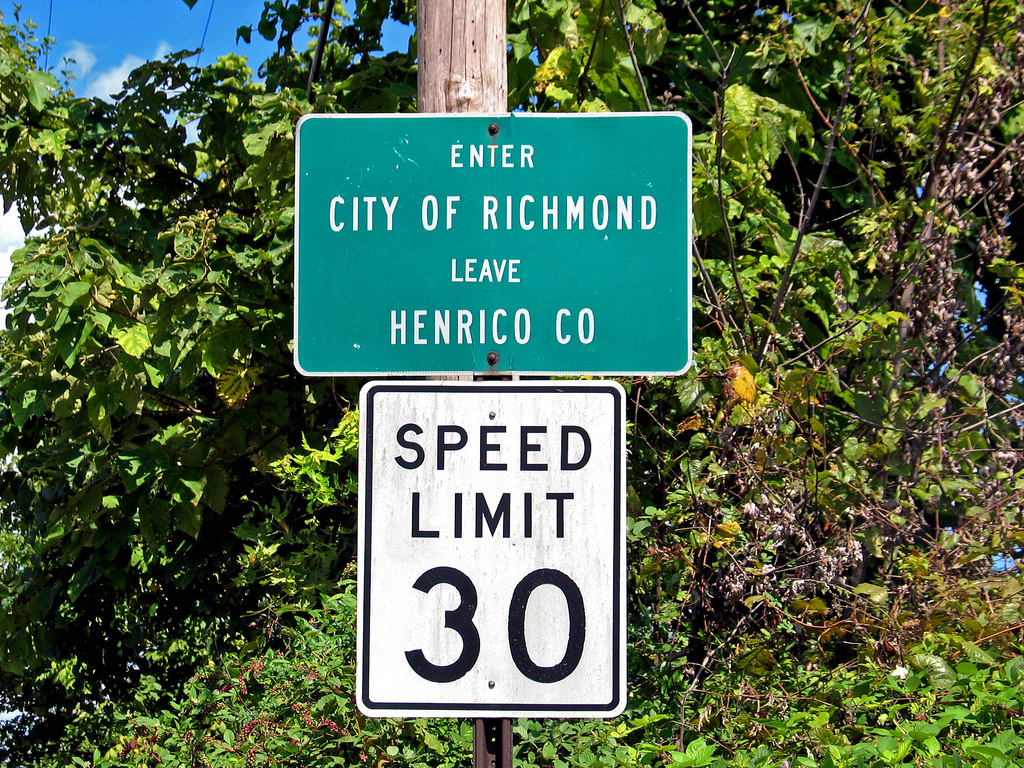
Henrico and Richmond Road Sign
Courtesy of taberandrew via flickr.com

If you are an adult and have been charged with a criminal or traffic offense in Henrico, Virginia, chances are your first (and hopefully only) stop will be in the Henrico General District Court.  We thought it might be helpful to post a few suggestions about how to handle yourself, and about what to expect.

1. Dress for Court!

  • Do not dress for a lazy day at home.  Dress nice.  If you are not going to wear business casual attire (which is recommended), at least make sure that you wear pants as opposed to shorts.  As you might imagine, many Judges appreciate individuals who show respect for the Court.  Your apparel decisions can suggest to a Judge what level of respect (or disrespect) you have for the Court system.

2. Be Quiet and Respectful.

  • Talking and acting out in Court is strongly discouraged—it is even possible to be held in contempt for certain conduct.  So, be courteous and respectful while inside the Courthouse, and be particularly polite to the Judges, clerks, and deputies!

3. There are 5 Henrico County General District Courtrooms.

  • After you go through the metal detectors at the main entrance, you will find that all of the General District Courtrooms are located on the first floor—two on the left side of the main stairwell, and three on the right side.  There are docket screens posted outside each Courtroom.  When you arrive, look for your name on the screens.  When you find your name, you have found your Courtroom!

4. Be On Time!

  • As a general rule, the Judges in Henrico start their dockets on time.  Sometimes, a Judge may even want to call your case early.  We suggest showing up at least 15 minutes early in Henrico General District Court.  That will give you time to locate your courtroom and settle in before your case is called.
  • Normal traffic/criminal dockets are at 9:30 a.m. and 11:00 a.m. If your first hearing is an arraignment, if your case is scheduled for attorney status, or if your case was taken under advisement, you might have Court at 8:30 a.m. or 9:00 a.m.  Check your summons/warrant to confirm your date and time.
  • If you are not 100% sure when you are supposed to be in court, call the clerk’s office and/or check your online status (read our post: Have a Pending Civil or Criminal Case in Virginia?  Check Your Case Status Online).
  • Additional information about the location, contact information, and basic docketing schedule can be found at the Virginia Courts Website.

5. Speak with an Attorney as Soon as Possible.

  • If you have not discussed your case with an attorney, it might be wise to do so.  An attorney will help explain the nature of the traffic or criminal charge against you, what defenses you might have, and what outcomes might be expected.

The Virginia trial attorneys at BoykoNapier practice regularly in all Henrico County Courts, and throughout the Richmond area, including Chesterfield, Hanover and the surrounding localities.  Call our office today at (804) 658-3418 to speak with an experienced criminal defense attorney, or feel free to contact us via email.

Filed Under: Criminal Law Tagged With: Court Date, Criminal Defense, Criminal Law, Experienced Attorney, Henrico, Traffic Offense, Virginia

Sentencing Hearings in Virginia Criminal Cases

July 2, 2013 By Marc Leave a Comment

Courtroom
Courtesy of srqpix via flickr.com

In Virginia, once a Defendant has been found guilty of a criminal charge, whether by a Judge or Jury, the trial will proceed with a sentencing hearing (i.e. the punishment phase).  During this hearing, both sides–the Commonwealth and the Defense–are permitted to present evidence and argument before the Court makes a final ruling.

Evidentiary Phase:

  • Witnesses for the Commonwealth:

    • Quite frequently, particularly in situations of violence, the Commonwealth’s Attorney will call the victim and/or the victim’s family to the stand to testify about the impact of Defendant’s actions—a.k.a. “Victim Impact Statements”.
    • The Commonwealth may also call other witnesses—these could include other individuals who may have been impacted by the crime involved, or perhaps individuals who can lay foundation for a restitution award.
  • Witnesses for the Defense:

    • The Defense attorney’s job in the sentencing phase is primarily referred to as “mitigation”–i.e. to lessen the severity of the situation.  The Defense may choose to call family members of the Defendant, or even the Defendant himself, to establish the emotional and economic impact on the family, as well as the nature of Defendant’s character.
    • It may also be appropriate to call witnesses to speak about any physical or mental illnesses (including addictions) the Defendant suffers from.   This may be done in conjunction with a request for a sentencing alternative–i.e. a treatment program for mental illness, addiction, or both.
  • Documents for the Commonwealth:

    • The Commonwealth will certainly be introducing the Defendant’s criminal record, which is one of the primary items that the Court will use in determining the punishment. The Commonwealth may also introduce additional documents, including photographs of injuries (if applicable) and evidence of restitution (i.e. medical bills) that they will ask the Defendant to pay.
  • Documents for the Defense:

    • The Defense will often introduce mitigating evidence through documents. Here are some common types:
      • Character Letters–from friends, family, employers, co-workers, members of the clergy, etc.
      • Evidence of restitution payments (i.e. receipts/canceled checks)
      • Evidence of community involvement/community service
      • Medical and psychological evaluations
      • Certificates of completion of character building courses–anger management, shoplifter’s prevention, etc.
      • Apology letters
      • Evaluation Reports or letters related to Sentencing Alternatives–i.e. documentation showing the treatment programs that will accept Defendant
        • Note: In Central Virginia (i.e. Richmond, Henrico, Chesterfield, Hanover), there are a variety of programs that most Judges will consider–it is important to speak with your attorney to find out what programs you might qualify for.
  • Felony cases:

    • Virginia Sentencing Guidelines
      • The Court will receive sentencing guidelines if the Defendant has been convicted of a felony.
      • The “guidelines” are a suggested sentencing range that the Court will consider in determining an appropriate term of incarceration. The guidelines are calculated using a variety of factors, most notably the nature of the current conviction and the criminal history of the Defendant.  The guidelines are not mandatory–the Court can choose to deviate from them as the circumstances may warrant.
      • Your attorney should review the sentencing guidelines with you prior to the sentencing hearing so that you are aware of their impact on the Court’s decision.
    • Pre-Sentence Reports
      • In felony cases, the Court will usually receive a comprehensive analysis of the Defendant in what is referred to as a “pre-sentence report”.
      • This report is designed to provide the Court and the parties with a historical overview of the Defendant’s background—including his family history, mental health issues (if applicable), socioeconomic information, details regarding the current offense and the Defendant’s criminal record.

Argument Phase:

Once the witnesses and evidence have been presented by both the prosecution and defense, the Court will permit time for each attorney to argue their proposed disposition. The amount of time necessary for this phase will depend largely on the complexity and the seriousness of the charge.  You can expect both sides to comment on the evidence and witness testimony, the nature of the present charge and the sentencing guidelines.  As is noted above, it is also common for the Defendant to request an alternative to incarceration–a residential drug treatment program, for example.

At the conclusion of the argument phase, the Judge will render a decision.   The Defendant will have options regarding appeal if he or she is not satisfied with the outcome.

If you have any additional questions about sentencing hearings, or any other criminal defense related inquiries, please contact BoykoNapier to speak with one of our experienced attorneys.  We can be reached via phone at (804) 658-3418, or via email.


Filed Under: Criminal Law Tagged With: Chesterfield, Criminal Law, Felony, Hanover, Henrico, Pre-Sentence Report, Richmond, Sentencing, Sentencing Guidelines, Treatment Programs, Virginia

DUI Investigations – A Brief Overview

April 23, 2013 By Marc Leave a Comment

Holding beer in car
Courtesy of James Cridland via flickr.com

In Virginia, if a police officer suspects you of driving under the influence (a.k.a. DUI or DWI), there are a few investigative techniques that will likely be used.  This article will briefly explain these techniques, as well as a couple of issues that may arise if you are in fact arrested for DUI.

PRE-ARREST

Why Might an Officer Suspect you of DUI?

  • Erratic Driving – swerving, driving too slow or too fast, disregarding traffic signs
  • Odor of Alcohol – the officer smells alcohol when he approaches your window to talk with you
  • Slurred Speech – the officer concludes that you are slurring your speech when you talk to him
  • Admission of Drinking or Drug Use – if you admit to alcohol or drug use, the officer’s suspicion of intoxication will naturally increase
  • Other Reasons – bloodshot eyes, anonymous tips, officer’s personal observations, intoxication of your passengers, etc.

Questions an Officer May Ask:

If an Officer suspects that you have been consuming alcohol, you may be asked a series of questions that are likely designed to get you to confirm the officer’s suspicions.

  • Where are you coming from?
  • Where are you heading?
  • Have you been drinking?
  • Why do I smell alcohol on your breath?
  • How long have you been drinking?
  • How many drinks have you had?

These questions are also usually asked to enable the officer to examine your demeanor, your eyes (to see if they are bloodshot) and your speech (to see if it is slurred).

Field Sobriety Tests:

Once an officer suspects you of driving under the influence and has pulled you over, it is likely that you will be asked to perform field sobriety tests or “FSTs”.  Officers typically tend to conduct several field sobriety tests on a subject and most are performed outside of the vehicle, on a flat surface.  The officer should provide instructions before asking you to perform each test.

The type of tests range from asking you to walk a straight line, lift a leg and count, say the alphabet, and follow a pen with your eyes.  It is advisable that you speak with an experienced DUI defense attorney to discuss under what circumstances you should perform these tests.

Preliminary Breath Test / “PBT”

The PBT is the breath test that an officer will often ask to give you on the side of the road.  This is different from the breath test you would perform at the police station (discussed below); it is designed to tell the officer the “probable alcoholic content” in your blood. The PBT is, therefore, a common tool to give the officer probable cause to arrest you for a DUI.  It may be helpful to carefully read the statute (Va. Code Section 18.2-267) and speak with an attorney.

POST-ARREST

Search of Your Vehicle

Typically done after arrest, the officer may decide to search your vehicle for additional information—items which may provide additional evidence to help in his investigation (i.e. alcohol in the vehicle, or additional contraband). Note, your vehicle may also be impounded.

Breath Test at the Station (a.k.a. “Breathalyzer”)

Often referred to as the Breathalyzer, once arrested, you will likely be taken to have your breath analyzed at the police station.  In case you are interested, here are a few of the significant statutes (Va. Code Section 18.2-268.2, Va. Code Section 18.2-268.3, Va. Code Section 18.2-269) but it would be wise to speak with an attorney about this test.

Blood Test

If the breath test is unavailable, or if the suspicion is that your intoxication is based on drug use, the officer may attempt to have your blood drawn for the purpose of providing an analysis of substance levels in the blood.

Note for Commercial Drivers:

If you were operating a commercial vehicle and are suspected of drunk-driving, it would be wise to contact an attorney as different or additional rules may apply (i.e. Va. Code Section 46.2-341.25).

Please note that this article is not intended to offer legal advice as to when/if you should perform any of these tests—it is only designed to be informative as to the nature of the tests.  It is advisable that you speak with an experienced DUI defense lawyer about how all of these tests may apply to you, particularly if you have a commercial driver’s license.

At BoykoNapier, our attorneys are experienced in handling drunk-driving / DUI cases throughout Central Virginia, including Richmond, Henrico, Chesterfield and Hanover.  If you have a drunk-driving case, or simply have questions regarding drunk-driving, call us at (804) 658-3418 or contact us via email.

Filed Under: Criminal Law Tagged With: Criminal Defense, Criminal Law, Drunk Driving, DUI, Field Sobriety Tests, Henrico, Richmond, Virginia Code

Charged with Domestic Assault and Battery? What You Should Know about the First Offender Program

March 20, 2013 By Marc Leave a Comment

Richmond, Virginia Capital
Courtesy of Ron Cogswell via flickr.com

In Virginia, if you are charged with Domestic Assault and Battery (Virginia Code Section 18.2-57.2) and have no previous convictions for this offense you may be entitled to relief from conviction under Virginia Code Section 18.2-57.3, commonly referred to as the “First Offender Program”.   We would recommend that you speak with an experienced criminal defense attorney in order to discuss the details of the program, as well as your eligibility.  Here are a few quick points:

How do I get into the First Offender Program?

  • If you are eligible for first offender, and have been found guilty of domestic assault and battery (whether through pleading guilty, or following a trial), you can ask the Court to allow you to enter into the first offender program.
  • If the Court grants your request, your case will be continued for at least 2 years.  You will be placed on “probation” and will be obligated to perform various tasks.

What will I be required to do during probation?

  • Complete an assessment/evaluation through the local probation agency and abide by the treatment/educational programs recommended by the results of such assessment/evaluation, as well as any programs the Court may require.
  • Frequently, you will be required to complete an anger management course.
  • If the defendant was under the influence of drugs or alcohol at the time of the offense, it is common for the Court or probation officer to require the defendant to undergo random drug/alcohol screens.
  • Make reasonable efforts to secure and/or maintain employment.
  • Keep the Peace and Be of Good Behavior: if you get new charges during the period of probation, you will likely violate the terms of the program.
  • Pay the costs of the program: the costs will differ based on your financial status.

What happens if I do everything that is asked of me?

  • Your case will likely be dismissed after the probation period ends (usually 2 years).

Note: Be honest with yourself before committing to participate in the program.  2 years is a long time to be on probation and certain obligations can be difficult to complete—especially if you are juggling raising a family and a full-time job.  If you are someone who enjoys a few adult beverages on occasion, ask your attorney about the likelihood of being subject to random alcohol screens.  Positive alcohol screens cause a lot of people to flunk the program, which usually results in a conviction and can also lead to severe punishment (some Judges are bothered when a person doesn’t take full advantage of this “second-chance”).  Nevertheless, I would urge you not to be deterred—dedicate yourself to the program and you will be glad that you did.  When the Judge dismisses your case, it will be worth it in the end.

Filed Under: Criminal Law Tagged With: Assault and Battery, Criminal Defense, Criminal Law, Domestic Assault, First Offender, Probation, Virginia Code

Drug Possession Charges and the First Offender Program

March 2, 2013 By Marc Leave a Comment

Richmond, Virginia Skyline
Courtesy of rvaphotodude via flickr.com

In Virginia Courts, if you are charged with possession of narcotics and have no previous drug-related convictions you may be entitled to relief from conviction under Va. Code Section 18.2-251, commonly referred to as the “First Offender Program”.   Be sure to ask your attorney about your eligibility.

How, you might ask?

Convince the Court to allow you to participate (a Judge is not required allow you to enter into the program)—this can be done in a variety of ways, most commonly by an agreement with the Commonwealth’s Attorney, explanation of mitigating factors or simply by entering a plea and advising the judge of your request to be placed into the First Offender Program.

If the Court grants your request, the case will be continued for a period of time (the “probationary period”).  During this time you will be obligated to perform a variety of tasks, including:

  • Completion of substance abuse assessment, and substance abuse treatment/education if appropriate
  • Remaining drug and alcohol free: you will be required to undergo random drug/alcohol screens (note: for a lot individuals, this is the most difficult task)
  • Making reasonable efforts to secure and/or maintain employment
  • Completion of community service hours (at least 100 hours if you are charged with a felony, up to 24 hours if you are charged with a misdemeanor)
  • Complying with a suspended driver’s license: your license will be suspended for a period of time (many judges will authorize a restricted license which will allow you to drive for certain things like work, school, medical care—read the authorized privileges: Va. Code Section 18.2-271.1(E)).
  • Stay out of trouble: if you get new charges during the First Offender Program, you will likely violate the terms of the program.
  • Pay the costs of the program (if you are indigent you can ask the Court to reduce or eliminate the costs).

Note: Be honest with yourself regarding the random drug and alcohol screens.  A lot of people fail the program because of a positive screen.  Why should that concern you?  A lot of Judges consider this program a second-chance and, if you are not fully compliant, they may punish you more severely than if you never even entered the program—many Richmond, Henrico and Chesterfield judges may even impose a significant amount of active jail time for failure to comply.

Don’t let this kind of warning scare you off.  Though the obligations may be difficult, in my humble opinion the upside of successfully completing the program is much greater than the potential downside.  Besides, if all goes well, your new favorite phrase will be: “Case dismissed!”

Related Posts Plugin for WordPress, Blogger...

Filed Under: Criminal Law Tagged With: Chesterfield, Criminal Defense, Criminal Law, Drug Posession, First Offender, Henrico, Richmond, Suspended License, Virginia Code

Call Us: (804) 658-3418

Subscribe to Blog via Email

Enter your email address to subscribe to this blog and receive notifications of new posts by email.

Recent Posts

  • BoykoNapier Attorneys Selected as Superlawyers
  • Virginia Divorce: Living Separately in the Same House
  • Virginia Divorce: Separation Agreements instead of Litigation

Categories

  • Child Custody
  • Child Support
  • Client Concerns
  • Criminal Law
  • Divorce
  • Family Law
  • Firm News
  • Holiday
  • Personal Injury
  • Uncategorized
  • Wills

Pages

  • Family Law
  • Criminal Defense
  • Personal Injury
  • Archive Page
  • Company Profile
  • Contact Us

Call Us: (804) 658-3418

Office Address:
5807 Staples Mill Road
Richmond, Virginia 23228
Phone: (804) 658-3418
Fax: (804) 658-3441

Social

  • View BoykoNapier’s profile on Facebook
  • View @boykonapier’s profile on Twitter
Google+
Disclaimer

Copyright © 2026 BoykoNapier, PLLC, all rights reserved