BoykoNapier, PLLC

  • Home
  • Practice Areas
    • Family Law / Divorce
      • Divorce
        • Contested vs. Uncontested Divorce
        • Separation Agreements
        • Spousal Support / Alimony
      • Child Custody, Visitation and Support
      • Adoption
      • Modification of Orders
      • Protective Orders
      • Premarital and Postmarital Agreements
      • Annulments
      • Qualified Domestic Relations Orders
      • Relocation Custody Cases
      • Grandparent and Third-Party Custodial Rights
    • Mediation: Divorce, Custody, Support
    • Criminal Defense / Traffic Defense
      • DUI / DWI, Driving Under the Influence
      • Drug Possession and Drug Distribution
      • Assault and Battery / Malicious Wounding
      • Larceny and Embezzlement
      • Reckless Driving
      • Juvenile Criminal Defense
      • Traffic Violations and License Suspensions
      • Expungement
  • Attorneys
    • Marc A. Boyko
    • Mary A. Napier
    • J. Ryan Ferry
    • Wallace “Woody” Gram
    • Mary C. Heffley, Paralegal
  • About Us
    • Why Choose Us
    • Fees and Costs
  • Blog
    • Resources
  • Contact

Call: 804-658-3418

Virginia Child Custody: Legal vs. Physical

November 17, 2014 By Marc Leave a Comment

children and parents
Courtesy of Karsten Bitter via flickr.com
license link

In Virginia child custody cases, many folks mistakenly believe that the phrase “joint custody” always means that parties share custodial time with their child.  However, in Virginia, there are two types of custody: legal custody and physical custody.  If you are dealing with child custody and visitation issues, it is important to know the difference.

What is Legal Custody?

Most parents have joint legal custody.  According to Virginia Code Section 20-124.1, “joint legal custody” means that parents have “joint responsibility for the care and control of the child and joint authority to make decisions concerning the child . . .”  Thus, parents with joint legal custody should collaborate and discuss important issues involving their child.

“Sole legal custody” would therefore refer to a situation where one parent holds the decision-making authority in reference to the child.

What is Physical Custody?

According to Virginia Code Section 20-146.1, “‘Physical custody’ means the physical care and supervision of a child.”  Joint physical custodians would thereby “share physical and custodial care of the child,” according to Section 20-124.1.

So, when you are discussing child custody, remember the distinction and be sure to address both “legal” and “physical” custody.  Also, remember that you can have “joint legal custody” and/or “joint physical custody”; just because you have joint legal, doesn’t mean you have to have joint physical.

If you have a questions about your child custody case, it is important to speak with an experienced Virginia custody lawyer.  The attorneys at BoykoNapier are experienced in all types of family law and divorce cases, including child custody, visitation and support.  Our attorneys represent clients throughout Central Virginia, including Richmond, Henrico, Chesterfield, Hanover and the surrounding localities.  Call BoykoNapier at (804) 658-3418 to schedule a consultation, or contact us via email.

Filed Under: Child Custody Tagged With: Child Custody, Experienced Attorney, Family Law, Virginia, Virginia Code, Virginia custody lawyer

Halloween Safety Tips from BoykoNapier

October 31, 2014 By Marc Leave a Comment

Kids in costume
Courtesy of liz west via flickr.com
license link

Happy Halloween everyone!  We hope you have a truly spooktacular evening.  Here are a few safety tips to keep in mind:

Travel in Groups

Trick-or-treating alone is dangerous.  Plus, hanging out with your friends and family is more fun!

Travel with Adults

It is important to make sure your children are properly supervised tonight.

Be Careful on the Roads

It is important to be extra cautious behind the wheel tonight.  There will lots of little kids running around, perhaps not paying attention to the traffic on the roads.

Don’t Drink and Drive

This rule is of course applicable to each and every night of the year.  However, Halloween is a particularly dangerous night to drink and drive due to the large number of pedestrians in the roadway.

Don’t Eat it All

Save some candy.  If you have too much, you can always bring some by our office!

Here are some additional points from the Chesterfield County Police Department.

HAVE FUN and BE SAFE!

*The attorneys at BoykoNapier handle divorce, family law and criminal defense matters throughout Central Virginia, including Richmond, Henrico, Chesterfield, Hanover and the surrounding localities.  If you or a loved one are in need of legal advice, give BoykoNapier a call today at (804) 658-3418, or contact us online.

Filed Under: Holiday Tagged With: Chesterfield, Drunk Driving, Halloween, Parenting

Virginia Divorce: Let Your Lawyer Handle It

September 25, 2014 By Marc Leave a Comment

Courtesy of wsilver via flickr.com license link
Courtesy of wsilver via flickr.com
license link

Let us face facts: Divorce is an emotional roller-coaster on a good day.  For most people, going through a separation and a divorce is nothing short of traumatic, even if the divorce is uncontested.

Inevitably, you will be required to make decisions along the way that impact you and your family; some decisions will be minor, and others will not.   If you have decided to “take matters into your own hands,” we urge you to reconsider.

The divorce process in Virginia is complicated and confusing.  There are legal issues at every turn, and you may not be fully equipped to address these issues.  It is important that you consult with an experienced Virginia divorce lawyer before diving, head-first into the world of family law.  The right divorce attorney can help you make the important decisions, and will be a vital source of information throughout the process.

Acting without (or against) legal advice may have a very severe impact on your future.  For example, if you receive a document from your spouse that purports to resolve some (or all) of the issues, it might appear very fair and equitable to you.  However, you might not fully comprehend some of the language, and your signature may cause you to waive certain claims that you would have otherwise had, such as a claim for spousal support, or perhaps a lucrative claim towards a share of a retirement account held by your spouse.

Too often, we meet with individuals who have suffered due to their failure to promptly consult with an experienced Virginia divorce lawyer.  Please do not let that be you.  Our suggestion: speak with a divorce lawyer as soon as you believe that a separation is imminent.  If nothing else, the consultation should help you avoid many of the common pitfalls.

BoykoNapier is based in the Richmond area and we are proud to represent citizens throughout Central Virginia, including Henrico, Chesterfield, Hanover and the surrounding localities. If you are going through a separation or divorce, please contact us.  Our attorneys are experienced in all aspects of Virginia divorce and family law issues.  Call us today at (804) 658-3418, or contact us via email.

Filed Under: Divorce, Family Law Tagged With: Divorce, Experienced Attorney, Family Law, Richmond, Separation, Virginia

“I Want Custody” – How to File in Virginia

September 15, 2014 By Marc Leave a Comment

Courtesy of Todd Binger via flickr.com license link
Courtesy of Todd Binger via flickr.com
license link

“I want to file for custody of my child.  How do I do that?”  As you can imagine, this is one of the most common questions posed to a Family Law Attorney.  Because filing for child custody or visitation is a stressful and confusing endeavor, we wanted to take a few minutes to share some information.  However, we cannot offer specific legal advise in this post because every case is unique.  That being said, we strongly encourage you to speak with an experienced Virginia Family Law Attorney about your circumstances.

Issue 1: What do I file in Virginia?

In Virginia, custody and visitation cases are normally initiated when a parent or other interested party files a “Petition”.  This assumes that there has never been any other court cases involving your child (if so, you would likely need to file a different pleading known as a “Motion to Amend”) and that Virginia has jurisdiction (see below).

Depending on the locality where your Petition is filed, you may have to make an appointment.  You will also typically be required to pay a filing fee, and to fill out a Uniform Child Custody Jurisdiction and Enforcement Act Affidavit.  Because of the varying policies of the different localities, it is advisable that you contact the locality where you plan to file in advance, or do some online research–Henrico County, for example, posts information about filing petitions on their website.

Issue 2: Where do I file?

This question is very case specific and consultation with a Virginia child custody attorney is highly recommended.  In order to determine where to file, several additional questions must be answered first in order to determine what state and locality has jurisdiction over custody and visitation of your child (i.e. what state/locality has the legal authority to make a ruling on custody/visitation).

Can you file in Virginia?  Briefly put, here are a few of the common issues that could potentially disrupt Virginia’s jurisdiction:

  • There is an existing court order from another state regarding custody and visitation;
  • Your child lives in another state;
  • Your child has lived in Virginia for less than six months and another parent lives outside of Virginia.

Assuming Virginia has jurisdiction, another significant hurdle is determining what city or county you should file in.   If you have never been to court before regarding your child, you will most likely want to file your petition(s) in the Juvenile and Domestic Relations District Court in the city or county where your child resides.  However, there are numerous issues that could impact this as well: for example, if the other parent of your child just moved out and took your child and moved to another locality, you may want to file where you live, and not in the locality where the child is now located.  Long story short, speak with an attorney to go over your specific circumstances to be sure you are filing the appropriate documents in the appropriate location.

Issue 3: What Will Happen After I File?

Procedurally speaking, you will usually get  a court date where a judge will make decisions regarding the issues before him or her (i.e. custody and visitation of your child).  Every city/county has their own policies and procedures that you will want to familiarize yourself with.  For example, the timeframe between filing your petition and your first court date will be different depending on where your case is being heard.  Counties and cities in the Richmond area tend to have busier dockets than some smaller counties.  Additionally, some localities refer parties to mediation and/or parenting classes prior to the Court date (or sometimes following the first Court date).  There are also a variety of other issues that could arise during your case, including: the appointment of a guardian ad litem to represent your child; psychological evaluations; counseling requirements; and the list goes on.

The attorneys at BoykoNapier are experienced in all types of Child Custody and Visitation matters in Virginia.  Our attorneys handle cases throughout Central Virginia, including Richmond, Chesterfield, Henrico, Hanover and the surrounding communities.  Call us to schedule a consultation at (804) 658-3418, or contact us via email.

Filed Under: Family Law Tagged With: Child Custody, Domestic Relations, Experienced Attorney, Family Law, Henrico, Richmond, Virginia, Visitation

Reckless Driving in Virginia: A Few Things To Know

July 30, 2014 By Marc Leave a Comment


Virginia Highway
Courtesy of Nicholas A. Tonelli via flickr.com
license link

In Virginia, Reckless driving is a very common charge that often comes as a surprise to most of our clients.  In light of the frequency of these charges, as well as the seriousness of the offense, take a minute to review some important information about Reckless Driving.

Reckless Driving is broadly defined by the Virginia Code

The Virginia Code defines reckless driving as “any person who drives a vehicle on any highway recklessly or at a speed or in a manner so as to endanger the life, limb, or property of any person”.  Va. Code 46.2-852.  As you can see, the language is broad enough to capture a wide variety of driving behaviors.

  • In addition to the broad “general” definition, there are additional statutes which specify certain driving behaviors as being reckless driving.  For example, driving a vehicle with faulty brakes, passing a stopped school bus and failure to properly signal a turn are all traffic infractions that are declared reckless driving by statute.
  • Perhaps the most common situations (in the Richmond area at least) where Virginians are charged with reckless driving are in situations involving a motor vehicle accident and situations involving high rates of speed.

Don’t Go Over 80 mph!

Everyone should be aware that you may be charged with Reckless Driving by Speed if you are going over 80 mph, or if you are going more than 20 mph above the posted speed limit (i.e. 46 mph in a 25 mph zone).  Even if the speed limit is 70 mph, if you are going 81 mph or more you can be charged with Reckless Driving.

Reckless Driving is a Class 1 Misdemeanor in Virginia

A Class 1 misdemeanor is the most serious misdemeanor offense in Virginia; a conviction carries up to 12 months in jail and up to a $2,500.00 fine.  Here are the Misdemeanor punishment ranges in Virginia.  To better understand the seriousness of a Class 1, consider that the following criminal offenses are also typically Class 1 misdemeanors: Assault and Battery, Petit Larceny, Possession of Marijuana, D.U.I. (Driving Under the Influence).  Additionally, under certain circumstances your license may be suspended by the Court if you are convicted.

Speak to an Experienced Traffic Defense Lawyer

If you receive a reckless driving charge, it is important that you contact an experienced Virginia Traffic Defense attorney about your case.  There are a variety of ways to avoid getting convicted as charged.  An experienced attorney can help you understand the issues at hand and the defenses you may have, so that you can improve your chances of achieving a good outcome in your case.

The attorneys at BoykoNapier are experienced in all types of Traffic and Criminal matters in Virginia.  Our attorneys handle cases throughout Central Virginia, including Richmond, Chesterfield, Henrico, Hanover and the surrounding communities.  Call us to schedule a consultation at (804) 658-3418, or contact us via email.

Filed Under: Criminal Law Tagged With: Criminal Defense, Defense Attorney, Experienced Attorney, Reckless Driving, Richmond, Traffic Defense, Virginia, Virginia Code

Difficulties in Divorce: Settling Before Court

June 23, 2014 By Marc Leave a Comment

Richmond Skyline
Courtesy of Ron Cogswell via flickr.com
license link

In Virginia Divorce cases, we work hard with our clients to attempt to resolve each case by settling out of court.

Believe it or not, in our experience, most cases are resolved before Court.   Why is that?

  • Because it is almost always in everyone’s best interest to finalize a case as quickly as possible.
  • The parties save money and time, and shield themselves from unnecessary emotional turmoil that naturally comes from battling things out in a courtroom.
  • If you have children, it is even more important to reach a resolution; the longer litigation lingers, the more your children will get dragged into the middle.

Suffice it to say, you should strongly consider an out of court settlement, provided the terms are reasonable and equitable.  How do you decide when a settlement offer is reasonable and fair?  Great question.  The answer depends on the facts of your case.  This is one area where your attorney’s experience will play a significant role.

  1. Communication directly between Attorneys

Perhaps the most common avenue to a settlement is the correspondence between the attorneys who represent the respective spouses.  Many cases have very few contested issues, making it relatively simple for the attorneys to help the parties resolve the case after just a few phone calls, emails or letters back and forth.  If the issues haven’t been resolved, or at least narrowed, after a few exchanges, it is probably time to consider other settlement methods.

  1. Settlement Conference

A settlement conference is a face-to-face meeting between the parties and their attorneys to allow the parties to converse with each other about their respective positions.  Settlement conferences are certainly emotional (far more so than exchanging letters), but they are usually very productive because communication between the parties in-person is one of the best ways to help them reach agreeable terms.

It is common for a Judge to require parties to attend a settlement conference prior to their trial date.  If you have been unwilling to attend a settlement conference for one reason or another, we would urge you to reconsider.  Speak with your attorney about the benefits of such a conference and you just might decide to change your mind.

  1. Mediation in Divorce Cases

Similar to a settlement conference, a Mediation is a meeting between the parties to discuss settlement.  The difference here is that a neutral individual (the “mediator”) is present to assist the parties by facilitating discussions and making recommendations.  The mediator is often someone trained in the law (a lawyer or a judge), who will help guide the parties towards a resolution by analyzing the facts and the legal issues involved in the case.  Mediation has a high success rate and is therefore a very popular settlement tool.

  1. Property Settlement Agreement

In Virginia, once the parties reach an agreement, the terms of that agreement are often put into a written contract referred to as a “separation agreement” (or “PSA” for property settlement agreement).  The PSA should spell out all of the terms of the parties’ agreement and should be filed with the Virginia Court when the parties finalize their divorce.  You can read more about property settlement agreements here.

The family law and divorce attorneys at BoykoNapier are experienced trial attorneys.  We handle cases through Central Virginia, including Richmond, Henrico, Chesterfield, Hanover and the surrounding localities.  If you have questions about a separation or divorce, call us today at (804) 658-3418, or contact via email.

Filed Under: Family Law Tagged With: Divorce, Domestic Relations, Family Law, Mediation, Property Settlement, Separation, Settlement Conference, Virginia

Difficulties in Divorce: Dealing with Retirement Accounts

May 5, 2014 By Marc Leave a Comment

Richmond highway
Courtesy of jeff horne via flickr.com
license link

Any Virginia Divorce Lawyer will tell you that the first consultation with a potential client is a difficult task.  Going through a divorce is a painstaking process, especially when the parties have significant marital assets and/or debts to distribute.

One of the most common headaches is figuring out how to divide retirement accounts.  Most people are exceedingly frustrated to learn that they might have to fork over a portion of their retirement to their ex-spouse (the frustration boils if their spouse is the one seeking a divorce).   We thought it would be appropriate to answer a few FAQs.

What portion of your retirement account does your spouse get under Virginia law?

As with most things, it depends.  Only the “marital” portion of a retirement account is subject to division and distribution by a Judge.  Generally speaking, the marital portion of your retirement account is the amount of your contributions from the date of your marriage to the date of your separation (appreciation/depreciation of that amount is typically considered as well).  However, what your spouse actually gets really depends on the other circumstances of your case.

Are there ways to avoid giving your spouse a portion of your account?

In many cases, yes!  There are several ways to potentially avoid splitting up a retirement account.  A couple of common examples:

  • Even if you have a retirement account with marital assets that is subject to distribution by the Court, so too might your spouse.  His or her accounts might offset or exceed your own.  If that is the case, you might not have to divide up the retirement account in your name.
  • You may have other assets that could offset the retirement, or you might be able to assume marital debts to make up the difference.

What is a QDRO?

A QDRO (qualified domestic relations order) is a Court Order that divides up a retirement account.  Once the order is signed by a Virginia Judge, it is usually forwarded to the company holding the retirement assets.  Ordinarily, that company will review the QDRO and, once it is approved, they will divide the retirement funds into two accounts, one for each spouse.  For more information, look at our QDRO Page.

Can the Court split up a Pension Plan?

Yes.  The Court can also order the division of pension plans and military retirement accounts.  Typically this is done with a QDRO, resulting in a portion of the account holder’s monthly payment being diverted to their ex-spouse.

If you are going through a divorce in Virginia and have retirement assets, it is important to speak with a experienced divorce attorney for specific advice.  There are ways to protect your interests and the right divorce lawyer can help.  At BoykoNapier, our attorneys have experienced dealing with complex marital retirement issues.  Call us at (804) 658-3418, or contact us via email to discuss your case today.  We handle cases throughout Central Virginia, including Richmond, Chesterfield, Henrico, Hanover and the surrounding localities.

Filed Under: Family Law Tagged With: Divorce, Family Law, marital assets, QDRO, retirement accounts, Virginia Divorce Lawyer

Child Support in Virginia: What You Should Know About Upcoming Changes in the Law!

April 16, 2014 By Marc Leave a Comment

child doing math
Courtesty of www.audio-luci-store.it via flickr.com
(license link)

Our legislature has stepped up to the plate and enacted new child support laws and guidelines.  The new guidelines will mark the first amendment in over 25 years.   Highlighted below are two significant changes to the Virginia Child Support laws:

Child Support Guidelines

If you look at the current Virginia Child Support Guidelines statute (Va. Code 20-108.2), you will see a long table with presumptive monthly child support obligations, based on the combined monthly gross incomes of the parents–aptly titled “Schedule of Monthly Basic Child Support Obligations”.

This table will be different in July 2014 when the amended statute takes effect.  If you look at the revisions (here: HB 933), you will immediately notice the differences.  The most notable:

  • There are new minimum amounts for the lowest income range, and the support figures change depending on the number of children.
  • The new guidelines have specific support figures for combined gross incomes over 10,000, all the way up to 35,000. 

Should you file to amend your current order based on these new child support guidelines? 

  • Possibly!  Depending on the circumstances, the new law may substantially increase or decrease the support amount in your case.  We would strongly suggest that you consult with an experienced family law attorney to determine whether the new law would lead to a deviation from the current amount that is significant enough to warrant the filing of a motion to amend your support order.

 Unreimbursed Medical Expenses

The current law requires that the custodial parent foot the bill for the first $250.00 in “reasonable and necessary unreimbursed medical or dental expenses” for each child who is the subject of the support order (unless the parties otherwise agree, or good cause is shown as to why this should not be the case).  After the first $250.00, the parties typically divide additional unreimbursed expenses in proportion to their gross incomes.  See Virginia Code 20-108.2(D).

The new law removes the $250.00 threshold.  This means that, absent good cause or an agreement to the contrary, the parties will proportionately divide all reasonable and necessary unreimbursed expenses.  This is a significant change for custodial parents—especially those with 2 or more kids who have currently been obligated to pay $500+ each year in unreimbursed expenses, before the other parent even becomes responsible for a portion.

Should you file to amend your current order based on this change in the law? 

  • If you are the custodial parent and your order requires you to pay the first $250.00 of unreimbursed medical expenses, you should contact a Virginia family law attorney to discuss your options.  It may be worthwhile to pursue an amendment to your order.

The Virginia trial lawyers at BoykoNapier practice family law throughout the Richmond area, including Henrico, Chesterfield, Hanover and the surrounding localities.  If you are considering a review of your child support order, contact BoykoNapier today at (804) 658-3418, or contact us via email.  

Filed Under: Family Law Tagged With: Child Support, Child Support Guidelines, Experienced Attorney, Family Law, Support Guidelines, Virginia Code, Virginia Trial Lawyers

Henrico County General District Court – 5 Tips for Your Case:

March 12, 2014 By Marc Leave a Comment

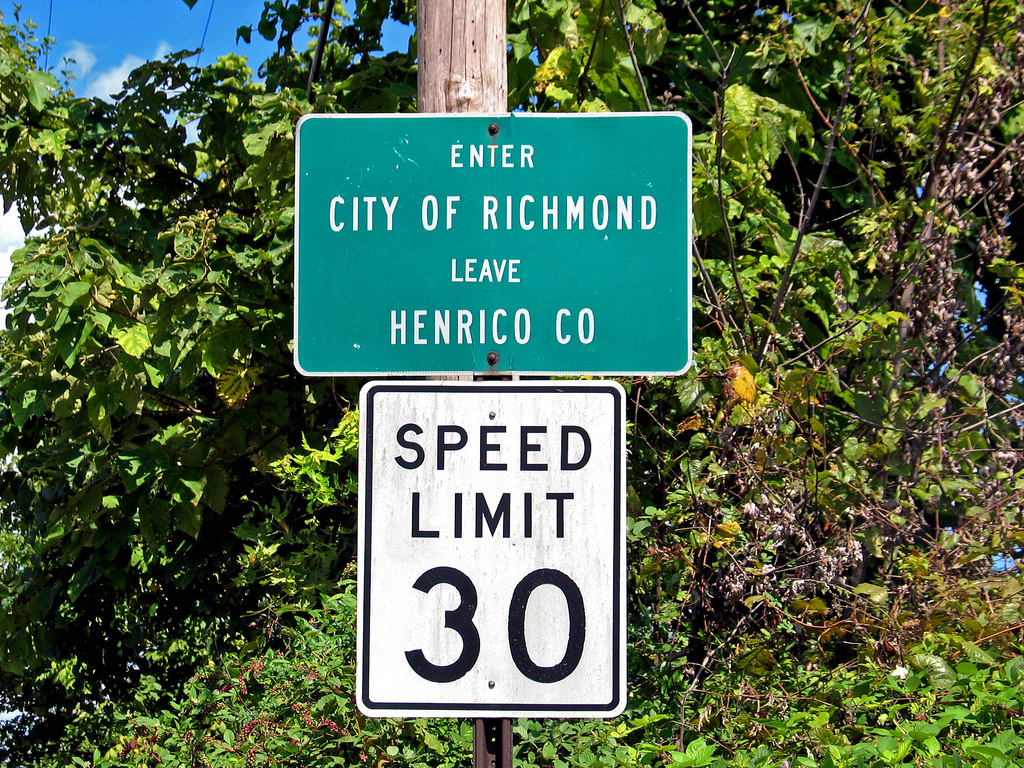
Henrico and Richmond Road Sign
Courtesy of taberandrew via flickr.com

If you are an adult and have been charged with a criminal or traffic offense in Henrico, Virginia, chances are your first (and hopefully only) stop will be in the Henrico General District Court.  We thought it might be helpful to post a few suggestions about how to handle yourself, and about what to expect.

1. Dress for Court!

  • Do not dress for a lazy day at home.  Dress nice.  If you are not going to wear business casual attire (which is recommended), at least make sure that you wear pants as opposed to shorts.  As you might imagine, many Judges appreciate individuals who show respect for the Court.  Your apparel decisions can suggest to a Judge what level of respect (or disrespect) you have for the Court system.

2. Be Quiet and Respectful.

  • Talking and acting out in Court is strongly discouraged—it is even possible to be held in contempt for certain conduct.  So, be courteous and respectful while inside the Courthouse, and be particularly polite to the Judges, clerks, and deputies!

3. There are 5 Henrico County General District Courtrooms.

  • After you go through the metal detectors at the main entrance, you will find that all of the General District Courtrooms are located on the first floor—two on the left side of the main stairwell, and three on the right side.  There are docket screens posted outside each Courtroom.  When you arrive, look for your name on the screens.  When you find your name, you have found your Courtroom!

4. Be On Time!

  • As a general rule, the Judges in Henrico start their dockets on time.  Sometimes, a Judge may even want to call your case early.  We suggest showing up at least 15 minutes early in Henrico General District Court.  That will give you time to locate your courtroom and settle in before your case is called.
  • Normal traffic/criminal dockets are at 9:30 a.m. and 11:00 a.m. If your first hearing is an arraignment, if your case is scheduled for attorney status, or if your case was taken under advisement, you might have Court at 8:30 a.m. or 9:00 a.m.  Check your summons/warrant to confirm your date and time.
  • If you are not 100% sure when you are supposed to be in court, call the clerk’s office and/or check your online status (read our post: Have a Pending Civil or Criminal Case in Virginia?  Check Your Case Status Online).
  • Additional information about the location, contact information, and basic docketing schedule can be found at the Virginia Courts Website.

5. Speak with an Attorney as Soon as Possible.

  • If you have not discussed your case with an attorney, it might be wise to do so.  An attorney will help explain the nature of the traffic or criminal charge against you, what defenses you might have, and what outcomes might be expected.

The Virginia trial attorneys at BoykoNapier practice regularly in all Henrico County Courts, and throughout the Richmond area, including Chesterfield, Hanover and the surrounding localities.  Call our office today at (804) 658-3418 to speak with an experienced criminal defense attorney, or feel free to contact us via email.

Filed Under: Criminal Law Tagged With: Court Date, Criminal Defense, Criminal Law, Experienced Attorney, Henrico, Traffic Offense, Virginia

Difficulties in Divorce: Filing Your Tax Returns

February 14, 2014 By Marc Leave a Comment

Snowday

It’s that time of year: Tax Time!

Each year, as the dreadful deadline of April 15 approaches, we are confronted with questions from clients about how they should deal with filing taxes.   These inquiries are so common we thought it might be beneficial to post a few bits of information in order to highlight some issues that frequently arise.  Please note:  you should be sure to speak directly with your tax-advisor or attorney for specific advice regarding your tax filings.


Situation A: Separated, but not yet Divorced. 

  • Do I file jointly or separately?
  • Who claims mortgage interest deductions?
  • Who claims the children?

These are very good questions.  If you have a current custody and/or support order, or a property settlement agreement, be sure to check whether these issues are addressed.  It is common for court orders and agreements to address all of these issues, as it makes the process of filing taxes easier on both spouses.  It would also be wise to consult the Internal Revenue Service’s website, as it answers a lot of common questions.

It is important to speak with your tax-advisor or attorney before deciding whether to file jointly or separately.  Often times, it will make more financial sense to file jointly because of the tax benefits—however, a joint filing can create arguments over how to divide the tax return.  It is common for the tax refund to be held in escrow by your attorney until you and your spouse can agree on the division of the refund.  If your spouse claims a deduction (i.e. mortgage interest, children) that you believe you might be entitled to, it would be wise to immediately consult an attorney or tax-advisor.

Situation B: Separated part of the year, Final Decree of Divorce entered in the tax year.

  • Do I have to file jointly?
  • Can I file separately?

Again, great questions.  If this situation applies to you, we strongly suggest you refer to the Internal Revenue Service’s website and the Virginia Department of Taxation website.  If your divorce was finalized, be sure to double check your divorce decree to determine if these issues are addressed.

Can I be held liable for my soon to be ex-spouse’s tax debt?

Maybe!  If your husband or wife has tax debt/liens which you are aware of, be sure to bring this to your attorney’s attention.  If you have already filed and the IRS has put you on notice that a portion or all of your tax return will be deducted for your ex-spouse’s tax debt, contact an attorney right away.  You should also refer to the Innocent Spouse Relief information through the IRS website.  You can apply to be held harmless from your spouse’s tax debt under certain circumstances.

If you have additional questions, please contact the attorneys at BoykoNapier.  Our Virginia family law and divorce lawyers handle cases throughout Central Virginia, including Richmond, Henrico, Chesterfield, Hanover and the surrounding communities.  Please call us at (804) 658-3418, or contact us via email.


Related Posts Plugin for WordPress, Blogger...

Filed Under: Family Law Tagged With: Client Concerns, Divorce, Domestic Relations, Experienced Attorney, Family Law, Separation, Tax Returns, Virginia

  • « Previous Page
  • 1
  • 2
  • 3
  • 4
  • 5
  • 6
  • Next Page »

Call Us: (804) 658-3418

Subscribe to Blog via Email

Enter your email address to subscribe to this blog and receive notifications of new posts by email.

Recent Posts

  • BoykoNapier Attorneys Selected as Superlawyers
  • Virginia Divorce: Living Separately in the Same House
  • Virginia Divorce: Separation Agreements instead of Litigation

Categories

  • Child Custody
  • Child Support
  • Client Concerns
  • Criminal Law
  • Divorce
  • Family Law
  • Firm News
  • Holiday
  • Personal Injury
  • Uncategorized
  • Wills

Pages

  • Family Law
  • Criminal Defense
  • Personal Injury
  • Archive Page
  • Company Profile
  • Contact Us

Call Us: (804) 658-3418

Office Address:
5807 Staples Mill Road
Richmond, Virginia 23228
Phone: (804) 658-3418
Fax: (804) 658-3441

Social

  • View BoykoNapier’s profile on Facebook
  • View @boykonapier’s profile on Twitter
Google+
Disclaimer

Copyright © 2026 BoykoNapier, PLLC, all rights reserved