BoykoNapier, PLLC

  • Home
  • Practice Areas
    • Family Law / Divorce
      • Divorce
        • Contested vs. Uncontested Divorce
        • Separation Agreements
        • Spousal Support / Alimony
      • Child Custody, Visitation and Support
      • Adoption
      • Modification of Orders
      • Protective Orders
      • Premarital and Postmarital Agreements
      • Annulments
      • Qualified Domestic Relations Orders
      • Relocation Custody Cases
      • Grandparent and Third-Party Custodial Rights
    • Mediation: Divorce, Custody, Support
    • Criminal Defense / Traffic Defense
      • DUI / DWI, Driving Under the Influence
      • Drug Possession and Drug Distribution
      • Assault and Battery / Malicious Wounding
      • Larceny and Embezzlement
      • Reckless Driving
      • Juvenile Criminal Defense
      • Traffic Violations and License Suspensions
      • Expungement
  • Attorneys
    • Marc A. Boyko
    • Mary A. Napier
    • J. Ryan Ferry
    • Wallace “Woody” Gram
    • Mary C. Heffley, Paralegal
  • About Us
    • Why Choose Us
    • Fees and Costs
  • Blog
    • Resources
  • Contact

Call: 804-658-3418

The Facebook Frenzy in Virginia Family Law Cases

January 20, 2014 By Marc Leave a Comment

Father with daughter and beer
Courtesy of Mooganic via flickr.com

Take a look around our social media-driven world and you will struggle to find someone who is not active on Facebook, Twitter, or Instagram.  Our newfound desire to publish snippets of our personal lives to a massive audience is astounding.  And while it is nice to be able to keep in touch with friends and family, these outlets can be dangerous as they tend to create powerful evidence in Virginia family law and divorce cases.

In around fifty percent of our contested divorce and child custody cases over the past few years, there is at least one piece of evidence that comes from a social media account—Facebook, primarily.  The most common are photographs of a parent consuming alcohol, or comments that admit important facts or display cruel and abusive behavior. 

While we strongly encourage you to close any social media profiles, most disobey that advice. 

Lesson 1: Watch What You Post

If you insist on being an active member of the social media world, despite being in the middle of a contested divorce or child custody dispute, think twice before you post something on the internet.  For example, if you are separated from your spouse but are still married, think twice before posting pictures of you and your new boyfriend/girlfriend.  If you are in the middle of a custody dispute, think twice before bad-mouthing the other parent.  While you may not expect the other person to notice, in our experience they usually will.  And then they will share the information with their attorney who will aim to use it against you in Court.

Lesson 2: Watch What Others Post

Remember all those pictures, updates and comments that you have been tagged in by others?  Well, you know who might be able to see these and, if they happen to be incriminating, you may be in trouble.

With this in mind, you may want to peruse these photos and comments that have been posted by others.  If there happen to be any which might be unsuitable for certain eyes, un-tag yourself and kindly ask the person who posted the photo to remove it.

Lesson 3: Limit Access to Your Profile

If you haven’t already, be sure to check your account settings.  If you can limit your profile so that only your “friends” can see you activity you might be able to prevent the opposing party from stalking you online persona.   While this won’t necessarily bar access to someone who really wants to see what you are up to, it will hopefully serve as a good deterrent.

In conclusion, be careful when you are using social media accounts.  While these accounts have certainly become an integral part of the social lives of many in Richmond and the rest of Central Virginia, you must all remain mindful of the impact they may have on your divorce or family law case.

The Virginia family law and divorce attorneys at BoykoNapier are available to answer questions about the impact of social media in your case.  If you have a contested family law or divorce case in Virginia, call us today at (804) 658-3418.  We handle cases throughout Central Virginia, including Richmond, Henrico, Chesterfield, Hanover and the surrounding communities.  You may also contact us via email.



Filed Under: Family Law Tagged With: Child Custody, Divorce, Facebook, Family Law, Henrico, Richmond, Social Media, Virginia

The Role of a Guardian Ad Litem in Virginia Child Custody and Visitation Cases

January 3, 2014 By Marc Leave a Comment

two children
Courtesy of Kheel Center, Cornell University via flickr.com

If you are involved in contested child custody or visitation case in Virginia, chances are there will be a guardian ad litem appointed to represent your child.  Therefore, it is important that you familiarize yourself with the role of the guardian.

What is a Guardian Ad Litem?

Guardians are Virginia attorneys who are appointed by the Court in certain cases to represent minors or other incapacitated individuals. In Virginia, guardians are frequently appointed to represent children who are the subject of a custody or visitation dispute.  When appointed, a guardian’s job is to represent their client—the child—and to advocate for their client’s best interests.  Thorough guardians conduct a time-consuming investigation prior to trial, which would normally include interviewing the parents, extended family-members, relevant third parties (i.e. counselors, psychologists, daycare providers, teachers) and other witnesses.  It should also include “home visits” (observations of the homes of the parents or third-parties who are competing for custody/visitation) and reviewing important records (medical records, report cards, disciplinary records, etc.).

A guardian ad litem will also participate in the trial.  They may introduce evidence, question witnesses, and make a recommendation to the Judge as to what custody and visitation arrangement they believe is in the child’s best interest.

Will a Guardian Ad Litem be appointed in my case?

The short answer: Maybe.

The long answer:  It depends on the circumstances and on the city/county where your case is pending.  In our experience, some Judges tend to appoint a guardian ad litem in every contested case, regardless of the circumstances and regardless of whether both parents have hired their own attorneys.  Other Judges will require at least one of the parties to specifically request a guardian, and even then may be hesitant to appoint one without seeing a good reason for doing so. (Note: Virginia Code Section 16.1-266 (F) limits the Court’s ability to appoint guardians in cases where both parents have retained a lawyer.)

Should I request a Guardian Ad Litem in my case?

Good question.  It is a good question because a guardian can have a very influential role in your child custody or visitation case.  Judges tend to give a guardian’s opinion a great amount of weight.  This is likely due to their ability to meet the parties outside of Court, to see their home environment, and, most importantly, to talk to the children in a comfortable environment.

For these reasons, among others, it is important that you speak with an experienced family law attorney about whether or not you want a guardian appointed to represent your child.

What should I do if a Guardian Ad Litem is appointed in my case?

It is important to develop a good relationship with a guardian, given the fact that they serve an important and influential role in the case.  So, be responsive; return their calls, be cooperative and polite.  Remember that they are representing your child, not the other parent.  It is also wise to strongly consider hiring an experienced family law attorney if you have not already done so.  An attorney can help guide you through the litigation process, which includes interacting with the guardian and assisting them with their investigation.

If you have any questions about the guardian ad litem’s role in your case, contact an experienced Virginia family law attorney at BoykoNapier.  Our attorneys handle cases throughout Central Virginia, including Richmond, Henrico, Chesterfield, Hanover and the surrounding localities.  Call BoykoNapier today at (804) 658-3418, or contact us via email.

Filed Under: Family Law Tagged With: Child Custody, Domestic Relations, Experienced Attorney, Family Law, Guardian ad litem, Virginia, Visitation

Grandparent’s Rights in Virginia Child Custody and Visitation Cases

December 5, 2013 By Marc Leave a Comment

grandparents and grandchild
Courtesy of surlygirl via flickr.com

It is a well known fact that grandparents are often actively and intimately involved in the lives of their grandchildren.  Their roles often increase when the parents of their grandchildren are separated.  Grandparents may transform into the daycare providers, character witnesses, visitation supervisors, and the list goes on.

In light of their involvement, grandparents are often concerned about the welfare of their grandchildren and ask us about their legal rights pertaining to custody and visitation.  Because of the interest surrounding this topic, we felt it would be appropriate to post some general information.  This post is not intended to offer legal advice.  Every circumstance is unique and you should speak with an experienced family law attorney for specific advice.

Grandparents Can File Petitions for Custody and Visitation in Virginia

Virginia Code Section 16.1-241 gives Virginia Juvenile and Domestic Relations Courts jurisdiction to handle child custody and visitation matters.  While the legislature has not yet set forth a statute dedicated to grandparent’s custody and visitation rights, petitions for child custody and visitation can be filed by any person with a “legitimate interest”—this phrase generally includes grandparents, stepparents, other blood relatives, among others.  However, in our experience, most grandparents and other third parties are often unaware of the difficult legal hurdles they must leap in order to actually prevail on a child custody or visitation petition.

Biological Parents are Presumed to be the Best Custodians

Although grandparents and third-parties are able to file petitions for custody or visitation, the law affords the biological parents a tremendous amount of protection.  The law generally presumes that the biological parents of a child are the best custodians and the best decision-makers regarding who the child should visit with.

Burden of Proof is on Grandparents

This parental presumption can be overcome in certain circumstances with compelling evidence.  The grandparents will bear the heavy burden of proof and must meet that burden to succeed.

It is important to note that the burden of proof may differ depending on the type of case and the circumstances.  The burden in custody cases is different from that in visitation cases.  There are also often different burdens in cases when only one biological parent objects to the grandparents petition, as opposed to cases when both parents object.

In sum, grandparents and third parties are often permitted to pursue child custody and visitation in Virginia Juvenile Courts.  However, if you are involved in such a case, it is important to speak with a skilled family law attorney.

The Virginia family law attorneys at BoykoNapier have experience handling grandparent and third party custody and visitation cases.  We handle cases throughout Central Virginia, including Richmond, Henrico, Chesterfield and Hanover counties.  If you have questions regarding child custody and visitation, or any other family law issues, contact BoykoNapier today at (804) 658-3418, or via email.

Filed Under: Family Law Tagged With: Child Custody, Domestic Relations, Family Law, Family Law Attorney, Grandparents, Virginia, Virginia Code, Visitation

Difficulties in Divorce: Spousal Support Litigation in Virginia

October 29, 2013 By Marc Leave a Comment

Scales of Justice
Courtesy of Tim Evanson via flickr.com

It should come as no surprise that spousal support (Alimony) is often a hotly contested issue between a husband and wife during the divorce process.  The primary wage earner in the family (a.k.a. the breadwinner) almost never wants to pay support, while the lower wage earner (often the homemaker) usually asks for financial assistance.  This disconnect often leads to litigation.

In Virginia Circuit Courts, Judges have the express authority to award alimony to a spouse upon their request, which usually occurs incident to a divorce proceeding.  Assuming that the parties are unable to reach an agreement on support, Judges will typically conduct a hearing, listen to the evidence, and then look primarily to Virginia Code Sections 20-107.1 and 20-109 to analyze the issue before reaching a decision.  If you are in the midst of a divorce that involves the issue of spousal support, it is important that you review these statutes very carefully.

  • Note: The standards in Juvenile Court may be different.  Look at Virginia Code Section 16.1-287.17:1 which sets forth a formula for temporary spousal support in Juvenile Court (somewhat similar to the child support guidelines).

Statutory Bars to Spousal Support:

  • Adultery – if the Court finds you have committed adultery, it is possible that you will be prohibited from getting support.
  • Cohabitation – if the Court finds you have resided with another in a relationship analogous to a marriage for a year, you may unable to obtain future support.
  • Remarriage – if the spouse receiving support remarries, it may bar future support.
  • Death – death of either party will usually bar future support.

Will the Judge Award Spousal Support?  Arguing the Factors:

Assuming there is no statutory bar to alimony, the Judge’s decision will usually be guided by the 13 statutory factors from Virginia Code 20-107.1.  While all 13 factors are important, Virginia Lawyers often focus a few key factors when analyzing whether support will be ordered:

  • Factor 1.  “The obligations, needs and financial resources of the parties, including but not limited to income from all pension, profit sharing or retirement plans, of whatever nature”.
    • Virginia Lawyers often break down this factor to two issues: Need and Ability to Pay.  This suggests that requesting party must prove they have a need for support, and the requesting party must prove the other party has an ability to pay support.  This issue will often be analyzed using monthly income/expense statements for both parties.
  •  Factor 2. “The standard of living established during the marriage”.
    • This factor has an impact on factor 1.  Even if the primary wage earner can afford to pay support, if that payment isn’t necessary to allow the requesting party to live a similar lifestyle than a Judge may be hesitant to award support.
  • Factor 3.  “The duration of the marriage”.
    • The shorter the marriage, the more unlikely a Judge may be to award support.
  • Factors 9 and 12.  These factors involve employment decisions and earning capacity.  Issues frequently arise that involve questions about one parties efforts to obtain employment, or to earn as much as they are capable of earning.

If the Judge Awards Alimony, For How Long?

Looking at Factor 3 addressed briefly above, the length of the marriage is one of the primary issues that impacts the length of alimony payments.  It is sensible to assume that longer marriages will yield longer support orders.  Significant physical and mental conditions of the parties and/or their children in common can also have a significant impact on the length of support.   As this article is not intended to offer legal advice, it is important to speak with a skilled Family Law Attorney to discuss the issues pertinent to your case.

If you have questions about spousal support, the experienced Family Law and Divorce attorneys at BoykoNapier can help.  Our attorneys handle cases throughout Central Virginia, including Richmond, Henrico, Chesterfield and Hanover.  Call us for your free consultation at (804) 658-3418 or contact us via email.

Filed Under: Family Law Tagged With: Divorce, Domestic Relations, Experienced Attorney, Family Law, Spousal Support, Support Guidelines, Virginia Code

Annulment vs. Divorce

September 17, 2013 By Marc Leave a Comment

Richmond Church
Courtesy of Desiree N. Williams via flickr.com

Because we get asked this question often, we thought it would be prudent to clear up some common misconceptions about the grounds for Annulment.

Let’s start with the basic definitions:

An Annulment is a legal declaration that a marriage was invalid (a.k.a. null and void).

A Divorce, on the other hand, terminates a marriage between two parties.  A divorce does not negate the legality of a marriage, it simply dissolves the marriage.

Grounds for an Annulment

It is surprising to most that the grounds for annulment are very limited and are broken down into two categories: void and voidable marriages.

Void Marriages: marriages that the law determines to be automatically invalid

  • Bigamy: at least one of the parties was still validly married to someone else at the time of the marriage
  • Relative Marriage: where the parties closely related (i.e. brother/sister, aunt/nephew)
  • No License: in order for a marriage to be valid in Virginia, the parties must have obtained a marriage license.
  • Underage without Consent: Persons under 16 cannot marry (absent pregnancy) and persons under 18 must obtain parent/guardian consent to marry.
  • Incapacity: when either party lacked capacity to enter and consent to marriage, unless the parties were married for two years or more at the time of filing for Annulment, or the parties continued cohabitation after full knowledge of the basis for the Annulment.  The party who had capacity at the time of marriage, if applicable, shall not be entitled to file for an annulment.

Voidable Marriages: marriages that the law may determine to be invalid, depending on the circumstances

  • Impotency: if existing at the time of marriage
  • Felony conviction: if either party was a convicted felon at the time of marriage and had not disclosed such fact to the other party.
  • Pregnancy: Without knowledge of the other, if the wife was pregnant by someone other than Husband at the time of marriage, or if Husband fathered a child by another woman within 10 months of marriage
  • Prostitution: if either party had been a prostitute prior to marriage and had not disclosed such fact to the other party.
  • EXCEPTION: as with incapacity marriages above, these grounds for Annulment will be deemed waived if the parties were married for two years or more at the time of filing for Annulment, or the parties continued cohabitation after full knowledge of the basis for the Annulment.

NOT grounds for Annulment (to the shock of many):

  • Being married less than 6 months.
  • Failure to consummate the marriage.
  • Criminal conviction after marriage.
  • Never cohabitating together as husband and wife
  • Not knowing that your spouse carried substantial financial debt

 Grounds for Divorce:

The grounds for divorce are far more broad and include uncontested grounds (i.e. one year of separation) and contested grounds (i.e. adultery).  For more details regarding the grounds for divorce, please see: Contested vs. Uncontested Divorces.

If you have questions about an annulment or divorce, the experienced family law and divorce attorneys at BoykoNapier can help.  Our attorneys handle cases throughout Central Virginia, including Richmond, Henrico, Chesterfield and Hanover.  Call us to schedule a consultation at (804) 658-3418 or contact us via email.

Filed Under: Family Law Tagged With: Annulment, Divorce, Domestic Relations, Experienced Attorney, Family Law, Richmond, Virginia

Child Custody and Visitation – Best Interest Factors

September 6, 2013 By Marc Leave a Comment

Parents and Child
Courtesy of Bill Selak via flickr.com

If you are a parent who is going through a child custody and/or visitation dispute in Virginia, it would be wise to review the statutory factors that the Judge must consider in making his or her decision.   Commonly referred to as the “Best Interest Factors”, Virginia Code Section 20-124.3 is designed to help Judges make a decision that is in the best interest of the minor child who is the subject of the litigation.

The Best Interest Factors are fairly self-explanatory and most come as no surprise—relationship between parent and child, physical and mental condition of the parties, history of family abuse, etc.  However, it is helpful to review the factors carefully and present evidence on each factor so that the Judge is fully aware of how that factor applies to you as a parent.

Which custody and visitation factors are the most important?

We get asked this question a lot and the simple answer is: ALL OF THEM.  The Virginia Code does not present these factors with any sort of hierarchy.  However, there are some factors that tend to play a larger role in certain cases.

Family Abuse Cases (factor 9):
  • Obviously, in cases where there is a history of family abuse, the Judge is likely to pay close attention to the details surrounding the abuse.  Abuse that is proven can often make a tremendous impact on the outcome of the custody/visitation issue.
Serious Physical and/or Mental Illness (factors 1 and 2):
  • In cases involving a parent or child with a serious physical/mental illness, the circumstances surrounding the illness will often weigh heavily on a Judge for a variety of reasons—i.e. a child with a severe illness needs more attention than an average child; a parent with a severe illness may be unable to adequately care for their child.
Parenting Role (factor 5):
  •  “The role that each parent has played and will play in the future, in the upbringing and care of the child”.
  • Courts tend to award a lot of credit to the parent who has served as the primary care provider and primary custodian for the child.  We believe this is because it is that parent who usually has the strongest grasp of the child’s needs (which intertwines with factor 4).  Further, the ability of the parents to serve the child’s needs in the future is particularly important.
Co-Parenting Ability (factor 6):
  • “The propensity of each parent to actively support the child’s contact and relationship with the other parent, including whether a parent has unreasonably denied the other parent access to or visitation with the child”.
  • As you can imagine, it is very common for the Court to hear evidence that one parent has unreasonably denied the other with access to and visitation with the child.  In fact, this is one of the most common reasons that parents end up in custody and visitation disputes—an inability to agree on how they should share the time with their child.  Courts tend to favor parents who can demonstrate an ability to communicate effectively with the other parent and, more importantly, foster that parent’s relationship with the child.

To sum things up, it is extremely important for you to review all of the statutory factors and consider how they will apply in your case.  A skilled family law attorney will be of great assistance in this regard.

If you are in need of a n experienced and passionate Virginia custody and visitation attorney, call an attorney at BoykoNapier, PLLC  at (804) 658-3418, or contact us via email.

Filed Under: Family Law Tagged With: Child Custody, Domestic Relations, Experienced Attorney, Family Abuse, Family Law, Parenting, Virginia, Virginia Code

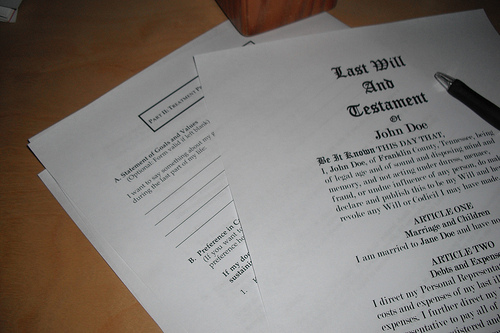
5 Reasons Why You Should Have a WILL

July 18, 2013 By Marc Leave a Comment

Will
Courtesy of Ken_Mayer via flickr.com

A quick surveillance of various online sources reveals a shocking, yet unsurprising fact: most people do not have a Will.

Despite the general consensus that a Will is one of the most important documents that an adult should have, most avoid the idea of contemplating death and associate having a Will with just that–death.  Even though our eventual passing is inevitable, for some reason writing down our postmortem wishes is unnerving.

But . . . this fear needs to be confronted and beaten down.  For the sake of our families and loved ones, we need to have Wills.  Especially in this day and age when lawsuits are plentiful and Wills are inexpensive to obtain in Virginia.  Here are a few simple reasons why you should have a Will:

1. A Will protects your estate from being the foundation for unnecessary and unwanted family turmoil.

  • There is much uncertainty in the minds of friends and family when a loved one passes.  While the emotional concerns are always overwhelming, so too are the monetary concerns.  And often, as you have undoubtedly seen or read about, families take to the Courtrooms to battle over estate distribution.
  • While a Will does not eliminate the possibility of family feuds, it is certainly a deterrent.  With a Will you are telling your heirs what your wishes are, and asking them to honor those wishes.  This is particularly important in situations where there are mixed family dynamics—i.e. children from separate relationships.

2. A Will gives you the power to determine who will look after your minor children, and their finances.

  • Every parent with a minor child should have a will—end of story (especially, persons who are married and have children from a separate relationship, regardless of age).  Nominate your predecessor, don’t leave it to chance.
  • While Americans often appoint “godparents”, it is not often written in legal stone.  A Will can help clarify your wishes as it pertains to care for your children—not just physically, but financially as well.

3. A Will gives you the power to choose who will handle the distribution of your estate.

  • Frequently in dispute is which heir should help administrate an estate when there is no Will.  This is problematic in families where the living heirs have strained relationships.
  • A Will gives you the opportunity to nominate the person (or persons) you’d like to be executor of your will—the person you trust to ensure that your wishes are carried out.

4. A Will gives you the power to provide financial support to multiple generations.

  • If you die without a Will, the intestacy laws in Virginia will operate to dictate the distribution of your estate.  Your heirs have no ability to creatively distribute your assets and your wishes will most likely be unknown and, therefore, not carried out.
  • With a Will you can ensure that your children and grandchildren share in your estate—even your great-grandchildren and their heirs.

5. A Will is easy and affordable to obtain.

  • Drafting a Will is neither time consuming, nor expensive.  The hard part is figuring out, for yourself, what you want the Will to say.  An attorney can help you through the process.

The experienced attorneys at BoykoNapier are available to speak with you about preparing a Will, Power of Attorney, and Advanced Medical Directive.  Call us today at (804) 658-3418, or contact us via email.

Filed Under: Wills Tagged With: Client Concerns, Experienced Attorney, Last Will and Testament, Power of Attorney, Virginia, Wills

Boyko and Napier selected for inclusion in Super Lawyers–Rising Stars Edition

July 16, 2013 By Marc Leave a Comment

SL-logo-270x65BoykoNapier, PLLC is pleased to announce that Marc A. Boyko and Mary A. Napier have been selected to the 2013 Virginia Rising Stars list.  Each year, no more than 2.5 percent of the attorneys in the state of Virginia are selected by the research team at Super Lawyers to receive this honor.  Our attorneys would like to thank their colleagues in the Richmond area for the nominations and support that led to this incredible recognition.

Super Lawyers, a Thomson Reuters business, is a rating service of outstanding attorneys from more
than 70 practice areas who have attained a high degree of peer recognition and professional
achievement. The annual selections are made using a patented multiphase process that includes a
statewide survey of lawyers, an independent research evaluation of candidates and peer reviews by
practice area. The result is a credible, comprehensive and diverse listing of exceptional attorneys.

The Super Lawyers lists are published nationwide in Super Lawyers Magazines and in leading city
and regional magazines and newspapers across the country. Super Lawyers Magazines also feature
editorial profiles of attorneys who embody excellence in the practice of law. For more information
about Super Lawyers, visit SuperLawyers.com.


Filed Under: Firm News Tagged With: Experienced Attorney, Marc Boyko, Mary Napier, Richmond, SuperLawyers, Trial Lawyer, Virginia, Virginia Trial Lawyers

Difficulties in Divorce: What is a Pendente Lite Hearing?

July 11, 2013 By Marc Leave a Comment

Country Home
Courtesy of pvdEric via flickr.com

Individuals going through divorce in Virginia will often ask themselves thousands of questions as they tread down the path of separation. One common concern that arises is, broadly speaking, TIME. Most people tense up when they hear how long it can take for a divorce to be finalized—once separation begins, a year or more is the norm.

“What do I do until then?” is an incredibly daunting thought. The “what-ifs” are bound to circle around in your head: what if my husband doesn’t provide any support; what if my wife keeps coming around my residence, or removes me from the health insurance policy . . . and so on.

Temporary Orders in Virginia Divorce Cases

While your circumstances will dictate what your best options are during a separation period (and because of that, it is important to speak with an attorney directly to determine your best course of action), it is helpful to know that you might be entitled to receive temporary relief from the Court.

Once a Divorce has been filed, you may ask for a hearing with the Court to enter a temporary order. This hearing is called a Pendente Lite hearing. This latin phrase means “pending the litigation” (per legaldictionary.com).

Thankfully, our Virginia legislature has kindly recognized that temporary relief is important. In Virginia Code Section 20-103, the legislature has given Judges the authority to make various rulings while the case is pending.

Common Pendente Lite Requests:

  • Temporary child and spousal support
  • Temporary custody of your minor children
  • Temporary use and possession of the marital residence
  • Order prohibiting the dissipation of marital assets
  • Order requiring a spouse to pay joint debts
  • Order requiring a spouse to provide health insurance coverage
  • Temporary award of attorney’s fees

The Court may also punish a party for contempt if they choose to disobey a Court Order while the case is pending. The purpose of this code section, and of the Pendente Lite hearing, is to provide a party with protection during what can often be a very lengthy divorce process.

If you have additional questions about Divorce, or Pendente Lite hearings, call BoykoNapier at (804) 658-3418, or contact us via email, and speak with an experienced Virginia Family Law Attorney today.

Filed Under: Family Law Tagged With: Child Custody, Child Support, Divorce, Domestic Relations, Experienced Attorney, Family Law, Pendente Lite, Separation, Virginia, Virginia Code

Sentencing Hearings in Virginia Criminal Cases

July 2, 2013 By Marc Leave a Comment

Courtroom
Courtesy of srqpix via flickr.com

In Virginia, once a Defendant has been found guilty of a criminal charge, whether by a Judge or Jury, the trial will proceed with a sentencing hearing (i.e. the punishment phase).  During this hearing, both sides–the Commonwealth and the Defense–are permitted to present evidence and argument before the Court makes a final ruling.

Evidentiary Phase:

  • Witnesses for the Commonwealth:

    • Quite frequently, particularly in situations of violence, the Commonwealth’s Attorney will call the victim and/or the victim’s family to the stand to testify about the impact of Defendant’s actions—a.k.a. “Victim Impact Statements”.
    • The Commonwealth may also call other witnesses—these could include other individuals who may have been impacted by the crime involved, or perhaps individuals who can lay foundation for a restitution award.
  • Witnesses for the Defense:

    • The Defense attorney’s job in the sentencing phase is primarily referred to as “mitigation”–i.e. to lessen the severity of the situation.  The Defense may choose to call family members of the Defendant, or even the Defendant himself, to establish the emotional and economic impact on the family, as well as the nature of Defendant’s character.
    • It may also be appropriate to call witnesses to speak about any physical or mental illnesses (including addictions) the Defendant suffers from.   This may be done in conjunction with a request for a sentencing alternative–i.e. a treatment program for mental illness, addiction, or both.
  • Documents for the Commonwealth:

    • The Commonwealth will certainly be introducing the Defendant’s criminal record, which is one of the primary items that the Court will use in determining the punishment. The Commonwealth may also introduce additional documents, including photographs of injuries (if applicable) and evidence of restitution (i.e. medical bills) that they will ask the Defendant to pay.
  • Documents for the Defense:

    • The Defense will often introduce mitigating evidence through documents. Here are some common types:
      • Character Letters–from friends, family, employers, co-workers, members of the clergy, etc.
      • Evidence of restitution payments (i.e. receipts/canceled checks)
      • Evidence of community involvement/community service
      • Medical and psychological evaluations
      • Certificates of completion of character building courses–anger management, shoplifter’s prevention, etc.
      • Apology letters
      • Evaluation Reports or letters related to Sentencing Alternatives–i.e. documentation showing the treatment programs that will accept Defendant
        • Note: In Central Virginia (i.e. Richmond, Henrico, Chesterfield, Hanover), there are a variety of programs that most Judges will consider–it is important to speak with your attorney to find out what programs you might qualify for.
  • Felony cases:

    • Virginia Sentencing Guidelines
      • The Court will receive sentencing guidelines if the Defendant has been convicted of a felony.
      • The “guidelines” are a suggested sentencing range that the Court will consider in determining an appropriate term of incarceration. The guidelines are calculated using a variety of factors, most notably the nature of the current conviction and the criminal history of the Defendant.  The guidelines are not mandatory–the Court can choose to deviate from them as the circumstances may warrant.
      • Your attorney should review the sentencing guidelines with you prior to the sentencing hearing so that you are aware of their impact on the Court’s decision.
    • Pre-Sentence Reports
      • In felony cases, the Court will usually receive a comprehensive analysis of the Defendant in what is referred to as a “pre-sentence report”.
      • This report is designed to provide the Court and the parties with a historical overview of the Defendant’s background—including his family history, mental health issues (if applicable), socioeconomic information, details regarding the current offense and the Defendant’s criminal record.

Argument Phase:

Once the witnesses and evidence have been presented by both the prosecution and defense, the Court will permit time for each attorney to argue their proposed disposition. The amount of time necessary for this phase will depend largely on the complexity and the seriousness of the charge.  You can expect both sides to comment on the evidence and witness testimony, the nature of the present charge and the sentencing guidelines.  As is noted above, it is also common for the Defendant to request an alternative to incarceration–a residential drug treatment program, for example.

At the conclusion of the argument phase, the Judge will render a decision.   The Defendant will have options regarding appeal if he or she is not satisfied with the outcome.

If you have any additional questions about sentencing hearings, or any other criminal defense related inquiries, please contact BoykoNapier to speak with one of our experienced attorneys.  We can be reached via phone at (804) 658-3418, or via email.


Related Posts Plugin for WordPress, Blogger...

Filed Under: Criminal Law Tagged With: Chesterfield, Criminal Law, Felony, Hanover, Henrico, Pre-Sentence Report, Richmond, Sentencing, Sentencing Guidelines, Treatment Programs, Virginia

  • « Previous Page
  • 1
  • 2
  • 3
  • 4
  • 5
  • 6
  • Next Page »

Call Us: (804) 658-3418

Subscribe to Blog via Email

Enter your email address to subscribe to this blog and receive notifications of new posts by email.

Recent Posts

  • BoykoNapier Attorneys Selected as Superlawyers
  • Virginia Divorce: Living Separately in the Same House
  • Virginia Divorce: Separation Agreements instead of Litigation

Categories

  • Child Custody
  • Child Support
  • Client Concerns
  • Criminal Law
  • Divorce
  • Family Law
  • Firm News
  • Holiday
  • Personal Injury
  • Uncategorized
  • Wills

Pages

  • Family Law
  • Criminal Defense
  • Personal Injury
  • Archive Page
  • Company Profile
  • Contact Us

Call Us: (804) 658-3418

Office Address:
5807 Staples Mill Road
Richmond, Virginia 23228
Phone: (804) 658-3418
Fax: (804) 658-3441

Social

  • View BoykoNapier’s profile on Facebook
  • View @boykonapier’s profile on Twitter
Google+
Disclaimer

Copyright © 2026 BoykoNapier, PLLC, all rights reserved