BoykoNapier, PLLC

  • Home
  • Practice Areas
    • Family Law / Divorce
      • Divorce
        • Contested vs. Uncontested Divorce
        • Separation Agreements
        • Spousal Support / Alimony
      • Child Custody, Visitation and Support
      • Adoption
      • Modification of Orders
      • Protective Orders
      • Premarital and Postmarital Agreements
      • Annulments
      • Qualified Domestic Relations Orders
      • Relocation Custody Cases
      • Grandparent and Third-Party Custodial Rights
    • Mediation: Divorce, Custody, Support
    • Criminal Defense / Traffic Defense
      • DUI / DWI, Driving Under the Influence
      • Drug Possession and Drug Distribution
      • Assault and Battery / Malicious Wounding
      • Larceny and Embezzlement
      • Reckless Driving
      • Juvenile Criminal Defense
      • Traffic Violations and License Suspensions
      • Expungement
  • Attorneys
    • Marc A. Boyko
    • Mary A. Napier
    • J. Ryan Ferry
    • Wallace “Woody” Gram
    • Mary C. Heffley, Paralegal
  • About Us
    • Why Choose Us
    • Fees and Costs
  • Blog
    • Resources
  • Contact

Call: 804-658-3418

BoykoNapier Attorneys Selected as Superlawyers

May 31, 2020 By Marc Leave a Comment

BoykoNapier

BoykoNapier is pleased to announce that Marc A. Boyko and Mary A. Napier have been selected as 2020 Virginia Super Lawyers:

  • Marc Boyko – Superlawyer – Family Law
  • Mary Napier – Superlawyer, Rising Star –Family Law.  

Each year, no more than 2.5 percent of the attorneys in the state of Virginia are selected by the research team at Super Lawyers to receive this honor.  Our attorneys would like to thank their colleagues in the Richmond area for the nominations and support that led to this incredible recognition.

SL-logo-270x65

Super Lawyers, a Thomson Reuters business, is a rating service of outstanding attorneys from more than 70 practice areas who have attained a high degree of peer recognition and professional achievement. The annual selections are made using a patented multiphase process that includes a statewide survey of lawyers, an independent research evaluation of candidates and peer reviews by practice area. The result is a credible, comprehensive and diverse listing of exceptional attorneys.

The Super Lawyers lists are published nationwide in Super Lawyers Magazines and in leading city and regional magazines and newspapers across the country. Super Lawyers Magazines also feature editorial profiles of attorneys who embody excellence in the practice of law. For more information about Super Lawyers, visit SuperLawyers.com.

If you are in need of a divorce or family law attorney, contact BoykoNapier today via phone at (804) 658-3418 or via email.


Filed Under: Uncategorized Tagged With: BoykoNapier, Family Law, SuperLawyers, Virginia Divorce

Virginia Divorce: Living Separately in the Same House

May 9, 2020 By Marc Leave a Comment

colorful houses
Courtesy of Sean O’Neill via flickr.com license link

In Virginia, spouses who wish to file for divorce are often required to prove that they have lived separate and apart for a period of time–usually 1 year, though it may be 6 months (if the parties have no children and executed a separation agreement).

Often, “separate and apart” means separate residences. But not always. Under Virginia law, spouses can live separately under the same roof.

In Bchara v. Bchara (2002), the parties were deemed to have been living separate and apart despite residing in the same home. They stopped attending church together; moved their belongings into separate rooms; slept in separate rooms; ceased intimacy; Wife stopped depositing funds into the joint bank account; and a friend of Wife’s visited the home regularly, and was able to corroborate the circumstances. While the Court’s decision was based on these unique factual circumstances, the decision provides some good guideposts to follow.

Tips for Residing Together During Separation

  • Communication – Tell your spouse that you are intending to be separate, and that your intention is permanent.
  • Finances – Open separate bank accounts and limit the commingling of funds when possible; avoid paying bills out of a joint account.
  • Inside the Home – Sleep in separate bedrooms; do not engage in physical intimacy; do not cook for each other or clean for each other.
  • Outside the Home – Avoid going places together; church/vacations/parties/dinners/holidays should not be attended together; do not shop for each other; remove your wedding ring and do not hold yourselves out as being a couple to others.
  • Build Corroborating Evidence – Tell your friends and family that you are separated, and advise them of the steps you are taking to remain separated; invite them to your home frequently so that they can observe you and your spouse living in different rooms and not sharing in any activities.

Please note that following the above listed tips will not guarantee a determination that you are living separate and apart. As noted above, every case is unique.

If you have questions about living separately in the same home with your spouse, please contact an experienced Virginia divorce and family law attorney at BoykoNapier. We can be reached by phone at (804) 658-3418, or by email.

*This post is not intended to offer specific legal advice.

Filed Under: Divorce, Family Law Tagged With: Divorce, Divorce Lawyer, Separate and Apart, Separate in the Same House, Separated Spouses, Separation, Virginia Divorce Law

Virginia Divorce: Separation Agreements instead of Litigation

April 22, 2020 By Marc Leave a Comment

scrabble agreement
Image courtesy of House Buy Fast via via flickr.com license link

As we discussed in a recent post regarding Coronavirus FAQs, access to our court system remains limited. For those who are encountering significant issues pertaining to separation and divorce, alternative dispute resolutions should garner more attention.

Perhaps the most common alternative dispute resolution option in Virginia divorce cases is a Separation Agreement (aka Property Settlement Agreement or “PSA”). In light of the current social-distancing requirements, a Separation Agreement may also be the most viable option.

What is a Separation Agreement?

A separation agreement is a (signed) legal contract between two spouses that details the terms of their separation. The agreement typically covers all of the issues that the parties need to address before getting divorced. While there are a number of common provisions, here are a few of the major topics that are often included:

  • Property Distribution
    • A description of how the parties’ assets will be divided.
    • This includes real property (house / rental home), tangible personal property (their stuff–vehicles, furniture, jewelry, etc.), and intangible personal property (bank accounts and retirement/investments).
  • Debt Distribution
    • A description of how the parties’ debt (e.g. credit cards / auto liens / student loans) will be resolved–which spouse will be responsible, or how the spouses will share the obligations.
  • Spousal Support
    • A description of the the support obligation (often a monthly payment from one spouse to the other), or a specification that the parties are waiving support.
  • Child Custody, Visitation and Child Support
    • For separating spouses who have minor children, they may elect to include provisions regarding child custody, visitation and child support.

Benefits of Separation Agreements

  • More Cost-Efficient and Time-Efficient
    • Litigation is very time consuming. Even simple cases take many months. More complex cases can take years to fully resolve. And it is expensive–attorney’s fees, court costs, missed time from work for hearings and depositions, etc.
    • Separation Agreements can provide you with a quicker and more cost-effective outcome. Many folks who reach agreements don’t ever set foot in a courtroom. Surprise, surprise: you save money on fees and costs. Avoiding the courtroom also helps you avoid the accompanying stress and anxiety, meaning you get a significant emotional benefit as well.
  • Determine Your Own Outcome
    • We have excellent judges in Central Virginia, but it is not uncommon for both litigants to walk out of a courtroom unhappy. There really are no “winners” in family law matters.
    • Separation Agreements allow the parties to maintain some control over the outcome. Sure, it might not be everything you want (as is the nature of compromise), but resting the decision in the hands of those who stand to be impacted by said decision makes a lot of sense.
  • Be Creative
    • Separation Agreements afford spouses with a lot of creative leeway. This includes the ability to add terms to their agreement even though a judge might be unwilling or unable to order the same terms (e.g. sharing a child’s college expenses).
    • Spouses can choose what terms to include and exclude from their agreement; it is feasible to do a partial-separation agreement (resolving some, but not all, of the issues in contest).

Separation Agreement Hurdles

  • You Have to Agree
    • Just because you prepare an agreement does not mean the other party has to sign. This is a contract; they have to be willing. Accordingly, there is no guarantee that your efforts (and expenditures) to prepare and negotiate terms will bear fruit.
    • Coming to an agreement is much easier said than done. There are reasons spouses choose to separate and, whatever the reasons may be, they often hinder communication and compromise.
  • Reasonableness
    • This goes hand-in-hand with the previous point, but reaching agreeable terms typically requires that both parties (and their attorneys) act reasonably.
    • If spouses have drastically different viewpoints/expectations, negotiations can fizzle out quickly. This is especially true for emotionally-charged issues (e.g. parenting-time with minor children, the amount of monetary support, who should keep the marital residence).
  • Time-Pressure
    • One major benefit of the litigation process is that it gives you the ability to use court-rules and deadlines to achieve results when your spouse is not particularly responsive or cooperative.
    • There are fewer tools in the negotiation realm; there is no technical deadline to respond to a draft agreement. If you do not have an active court case pending, it may be difficult to motivate your spouse to come to the negotiation table.

Despite the hurdles, a separation agreement can be an invaluable tool for spouses who are hoping to obtain a separation / divorce without litigation.

If you are interested in speaking with an experienced divorce and family law attorney about your options, please contact BoykoNapier by phone at (804) 658-3418, or via email.

Filed Under: Divorce, Family Law Tagged With: Alternative Dispute Resolutions, Divorce, Divorce Negotiation, Property Settlement Agreement, PSA, Separated Spouses, Separation Agreement, Virginia Divorce

Coronavirus Issues: Stimulus Funds for Separated Spouses

April 15, 2020 By Marc Leave a Comment

Torn dollar
Image courtesy of torndollar via flickr.com license link

As Coronavirus (COVID-19) continues to spread, the largest stimulus package in our nation’s history is aimed at minimizing the inevitable economic crisis.

As you have heard and read, a significant slice of CARES carves out billions in direct-pay stimulus funds (“recovery rebates”) for Americans who meet certain income qualifications.  While this is certainly welcome news for many, we have encountered a number of concerns about how the funds will be distributed and divided between persons who are married, but living separate and apart. Again, we are in uncharted territory.

Please note that this post is not intended to offer specific legal or tax advice and we recommend that you speak with the appropriate professional to determine your rights and options incident to CARES.

  • Separated Spouses (not yet divorced):
    • Who will receive the stimulus funds?
      • According to the text of CARES, funds will be disbursed “electronically to any account to which the payee authorized, on or after January 1, 2018, the delivery of a refund of taxes…” 
      • That being said, if spouses filed jointly in 2018 (or 2019) and received a refund via direct deposit, it appears that their stimulus check may in fact go directly into the same account, if it exists.  
      • This may present problems—i.e. only one spouse remains on the account and is unwilling to equitably divide the funds; both spouses are on the account, but one spouse removes all funds as soon as they are deposited.
    • How should funds be divided?
      • CARES does not appear to specifically address how to divide the funds between separated spouses.
      • That being said, this question prompts many other questions:
        • Are the funds marital property?
        • Should they be divided in accordance with income percentages?  Or should they be divided in accordance with general equitable distribution principles?
        • Should division of the funds depend on the relative financial impact of each spouse (i.e. if one spouse was laid off, while the other spouse remained fully employed)?
      • Time will tell how Courts will answer these questions, and the many others that are sure to arise. 
    • Note: the same questions / concerns set forth above may also apply to separated parents who don’t have an established custody order, or who have joint physical custody (50-50).
  • Suggestions?
    • It would be wise to speak with an experienced divorce and family law attorney, as well as an experienced tax professional to discuss your options and determine the best course of action.
    • We also recommend attempting to communicate with the other party (or through your attorney if you have one) in an effort to resolve the issue.  If you are able to reach an agreement, that may be the quickest practical solution.
    • If the IRS does not already have account information on file to deposit the stimulus funds, it may be wise to reach out to them to relay your status and to provide them with contact/account information.

If you would like to speak with an attorney today, please contact BoykoNapier by phone at (804) 658-3418, or via email.

Filed Under: Divorce, Family Law Tagged With: Dividing Stimulus, Divorce Issues, Separated Spouses, Stimulus Funds, Virginia Child Custody, Virginia Divorce

Coronavirus: FAQs for Virginia Divorce and Child Custody Cases

March 28, 2020 By Marc Leave a Comment

Corona Virus Legal
Courtesy of nursingschoolsnearme.com/ via flickr.com license link

We hope this is a once in a lifetime scenario: schools are closed, daycare facilities are closed, businesses are laying people off and closing their doors. The list goes on. 

It is difficult to navigate this uncertain and unprecedented situation; there are more questions than answers.  In this post we briefly address a few questions that we have been receiving for ongoing divorce and child custody cases.

  • Q: Will my scheduled hearing be canceled?
    • As our society continues to work towards containing the spread, the Virginia Supreme Court has ordered circuit and district courts to continue non-essential/non-emergent hearings. Most cases set between between now and April 26 will be rescheduled–including most divorce and child custody/visitation matters*. 
    • *Emergency custody hearings, abuse and neglect cases, and protective orders may continue to be heard.  Here is a link to the Supreme Court’s Order, which you should review. We strongly advise you to check with your jurisdiction to verify the status of your case.
    • If you already have an attorney, reach out to them; if you do not, we would recommend speaking with an experienced divorce and family law attorney regarding your specific circumstances.
  • Q: How can I resolve disputes that arise before the Courts will hear my case?
    • This is a very common concern, and a difficult question.  The short answer is: compromise.  We are all in unfamiliar territory, and we should work towards fair and reasonable resolutions whenever possible.  Use the Golden-Rule and remember that how you handle disputes right now can help/hurt your cause if you ultimately end up in front of a judge down the line.
    • It is also important to note that courts are technically open, despite hearing limited cases during this “shutdown”.  You may still be permitted to file pleadings/motions with the Court in order to take steps towards judicial relief.  You should check the current protocol in your jurisdiction and also speak with an attorney to determine how best to proceed.
  • Q: Since school is technically over until next semester, should our summer visitation schedule start immediately?
    • Another common, complicated question without a clear answer, unless somehow your Order is very specific regarding what should happen if school lets out early (unlikely). 
    • Again, this is unfamiliar territory.  Visitation language is not constructed to account for unknown and unexpected catastrophes, and as such there is likely to be valid arguments on both sides of this question.
    • As noted above, if you can reach a fair compromise, great.  Communicate with each other; co-parent.
  • Q: I am the primary custodian for my child.  Should I keep my child at home and deny visitation to the other parent until the coronavirus crisis passes?
    • We cannot advise our clients to disregard an existing Court Order and we reiterate how important communication and co-parenting is at this juncture.
    • Both parents should recognize the value of limiting exchanges/transportation for their children to maintain social distancing and minimize exposure.  Additionally, both parties should be considerate of unique circumstances that might heighten the risks (one parent’s immune-deficiency, for example).
    • That being said, the crisis should not necessarily be viewed as a means of withholding contact from the other parent.  Again, it is important to practice reasonable judgment and work towards a mutual resolution. 

If you would like to speak with an attorney to address questions about your case, please give BoykoNapier a call today at 804-658-3418, or you can contact us via email.

Filed Under: Child Custody, Divorce, Family Law Tagged With: Child Custody, coronavirus, Divorce Questions, Virginia Courts, Virginia Divorce Lawyer

Coronavirus: The Impact on Child / Spousal Support Obligations in Virginia

March 24, 2020 By Marc Leave a Comment

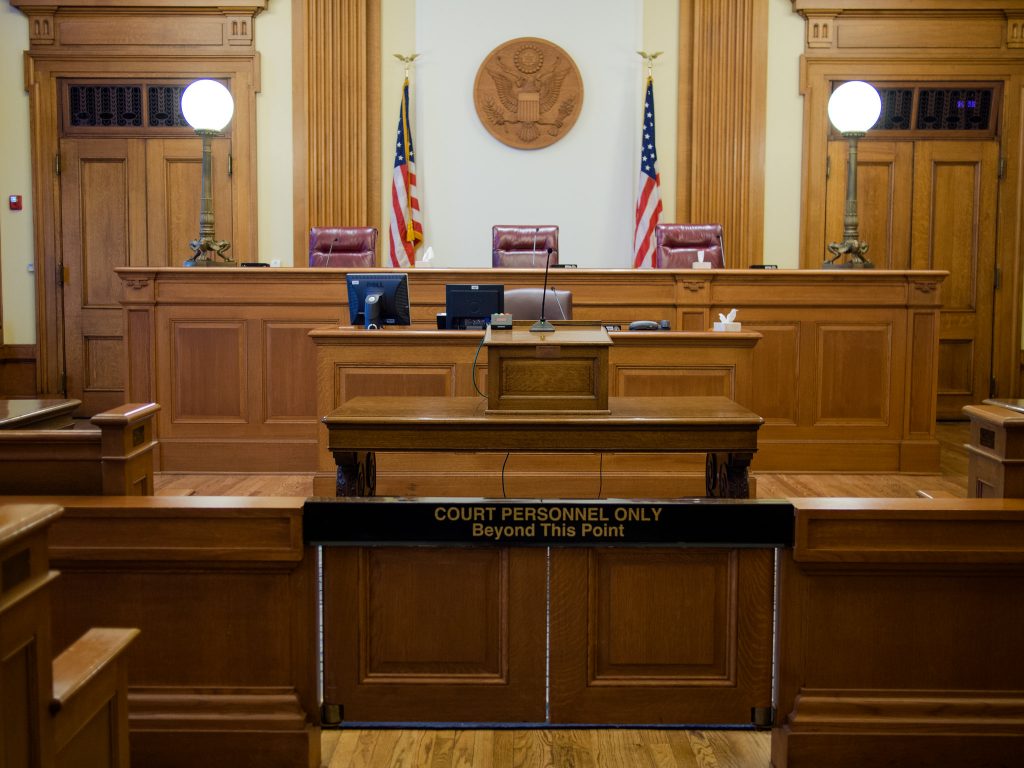
Empty Courthouse
Courtesy of Karen Neoh via flickr.com license link

Coronavirus (COVID-19) has brought an unprecedented and uncertain situation to our doorstep.  The rapid spread of this dangerous virus has resulted in illness and death for many Virginians.  Governor Northam’s most recent Executive Order has imposed more substantial personal and professional restrictions as we all strive to “flatten the curve” and limit infection.

While we are not here to comment on the personal health/safety issues at stake, we did want to share some thoughts regarding how this new normal is impacting a lot of our clients.  For this brief post, we will focus on the issue of court-ordered child and spousal support.

As we have already seen, layoffs abound, and many Virginians will experience a dramatic reduction in income.  Hopefully, this will be a short-term problem.  However, with the Courts being temporarily closed to non-essential causes, many of our clients have concerns over how to address their Support Order, so here are a few quick thoughts:

  • For all persons who have lost their income or are experiencing a significant income reduction:
    • It may be wise to attempt to find new employment and to apply for unemployment benefits, if you qualify. 
    • Keep track of all efforts to find new employment: maintain copies of written and email applications and any relevant correspondence with potential employers; keep a journal or spreadsheet with the names of companies that you’ve applied for and the dates of each application.  
    • Speak with the opposing party: given the court closure, as well as the likelihood that this crisis will impact everyone, the quickest avenue to relief may be through mutual agreement.*
    • File a Motion to Amend**.  Whether you are the payor (seeking to reduce the support obligation), or the payee (seeking to increase the support obligation), you should consider filing a Motion to Amend Support with the appropriate Juvenile or Circuit Court.  It is important to note that there may be a substantial delay in your ability to file in light of the ongoing crisis.
    • Speak to an attorney. An experienced divorce and family law attorney can help you explore all options so that you can determine the best avenue(s) to pursue.
  • For the PAYOR:
    • We cannot advise clients to disregard an existing spousal or child support order.
    • If you are the payor and cannot pay due to financial constraints, we would recommend that you make every effort to pay what you can (do your best to comply using income/financial resources available to you) until your ordinary income resumes or you are able to obtain a modification.** 
    • Making efforts to find employment/seek unemployment benefits and making partial support payments may help you avoid a contempt finding.

*Even if you are able to reach an “agreement” with the opposing party regarding temporary modifications to the terms contained in your support order, it may still be critical to have your agreement formalized in a new order or formal written agreement.  It would be wise to discuss any agreement that you reach with an attorney.

**If you have a spousal support obligation that is considered “non-modifiable”, you may not be able to seek modification from the Court and should speak with an attorney regarding available options.

If you would like to speak with an experienced divorce and family law attorney regarding your child or spousal support obligation, please contact BoykoNapier at (804) 658-3418, or you can reach us via email.

Filed Under: Child Support, Divorce, Family Law Tagged With: Child Support, coronavirus, Spousal Support, Support Attorney, Support Modification, Virginia Divorce Lawyer

Virginia Spousal Support: Reaching Retirement Age

May 15, 2018 By Marc Leave a Comment

Courtesy of Franck Michal via flickr.com
license link

On July 1, Virginia’s law regarding spousal support modification is going to change in a big way.  The legislature has enacted an amendment to the existing law which will increase the potential for spousal support to be modified or terminated when a person reaches their full retirement age.

According to various sources, it appears that the divorce rate among older couples has been dramatically increasing in recent years–this has been referred to as the “gray divorce revolution”. This trend has presumably paved the way for legislative changes which take into account specific needs unique to older couples.

The law governing spousal support modification is set forth in Va. Code §20-109.  For support obligations that are deemed to be modifiable, a party seeking to amend or terminate their spousal support payment generally needs to prove a “material change in circumstances”.  As you can imagine, there is a lot of litigation regarding what constitutes a “material change in circumstances”–particularly in cases involving persons who are retired, or are seeking to retire.

With this upcoming amendment (which you can review here: Spousal Support Amendment to 20-109) the new law will specify that reaching full retirement age can serve as a material change in circumstances. Under the new Va. Code §20-109, Judges will need to consider several factors relating to the unique circumstances of an individual’s retirement in determining whether a modification is appropriate. The courts will also be able to take into account the assets and property of both parties in determining whether a modification is proper.

If you have any questions about how the new Virginia Spousal Support law may impact your case, contact an experienced Virginia divorce lawyer at BoykoNapier today.  Our attorneys handle divorce, family law and support matters throughout Central Virginia, including Richmond, Henrico, Chesterfield, Hanover and the surrounding localities.  To contact a BoykoNapier attorney, call 804-658-3418, or you may reach us via email.

Filed Under: Divorce Tagged With: Divorce, Domestic Relations, Family Law, Material Change, Retirement, Spousal Support, Virginia Code

BoykoNapier Selected as Super Lawyers Rising Stars!

April 21, 2017 By Marc Leave a Comment

BoykoNapier, PLLC is pleased to announce that Marc A. Boyko and Mary A. Napier have been selected to the 2017 Virginia Super Lawyers Rising Stars list for Family Law.  Each year, no more than 2.5 percent of the attorneys in the state of Virginia are selected by the research team at Super Lawyers to receive this honor.  Our attorneys would like to thank their colleagues in the Richmond area for the nominations and support that led to this incredible recognition.

SL-logo-270x65

Super Lawyers, a Thomson Reuters business, is a rating service of outstanding attorneys from more
than 70 practice areas who have attained a high degree of peer recognition and professional
achievement. The annual selections are made using a patented multiphase process that includes a
statewide survey of lawyers, an independent research evaluation of candidates and peer reviews by
practice area. The result is a credible, comprehensive and diverse listing of exceptional attorneys.

The Super Lawyers lists are published nationwide in Super Lawyers Magazines and in leading city
and regional magazines and newspapers across the country. Super Lawyers Magazines also feature
editorial profiles of attorneys who embody excellence in the practice of law. For more information
about Super Lawyers, visit SuperLawyers.com.

If you are in need of a divorce or family law attorney, contact BoykoNapier at (804) 658-3418, or via email.

Filed Under: Uncategorized Tagged With: Divorce, Family Law, Marc Boyko, Mary Napier, Richmond, Super Lawyers, Virginia

Virginia Child Support: Understanding Imputation of Income

January 12, 2017 By Marc Leave a Comment

Richmond Skyline
Courtesy of Mobilis in Mobili via flickr.com

In Virginia child support cases, imputation of income can have a substantial influence the amount of a support obligation. Understanding how and when a court will impute income is a complex endeavor.  This post is designed to give you a few basic pointers so that you can better understand the concept of imputing income.  If you have questions about your specific case, it is important to speak with an experienced family law and divorce attorney.

  • Read the Virginia Code

In determining the amount of child support, a Virginia court is guided by child support guidelines.  These guidelines are “presumptive” in that a judge shall presume, subject to rebuttal, that the guideline figure is the appropriate figure for support.   However, Virginia Code Section 20-108.1 sets forth factors that a judge may consider in determining whether to deviate from the guidelines.  Factor number three states as follows:

  • “Imputed income to a party who is voluntarily unemployed or voluntarily under-employed; provided that income may not be imputed to a custodial parent when a child is not in school, child care services are not available and the cost of such child care services are not included in the computation and provided further, that any consideration of imputed income based on a change in a party’s employment shall be evaluated with consideration of the good faith and reasonableness of employment decisions made by the party, including to attend and complete an educational or vocational program likely to maintain or increase the party’s earning potential”

This language authorizes a Virginia court, in certain circumstances, to consider imputing income to a party based on that parties’ employment decisions.  Accordingly, this language plays a critical role in each imputation issue.

  • Determine Whether Imputation is a Potential Issue

If a Virginia Circuit or Juvenile Court imputes income to a party, the court has essentially declared that the parent should be earning more than the parent is actually earning.  These are some common examples of situations where this issue arises:

  1. A parent has quit, or been fired from their job
  2. A parent is working less than full-time hours
  3. A parent has taken a pay decrease, or accepted a different job for less pay
  4. A parent is not working, but is capable of working
  • Gather the Evidence

Proving that a parent is voluntarily unemployed or under-employed can be a difficult task.  In many cases, it is advisable to gather evidence to demonstrate the person’s earning capacity.  Some examples of relevant evidence may include past earnings (i.e. pay stubs, tax returns), documentation regarding termination of former employment (i.e. termination letter, employer disciplinary records), documentation regarding educational background, and medical records showing a capacity to maintain employment.

  • Consult with a Vocational Expert

A vocational expert may be a critical witness in your support case when imputation of income is an issue.  A vocational expert can provide an opinion regarding the earning capacity of a parent, and can show evidence of employment opportunities.  An opinion from such an expert can often become a vital piece of evidence that can sway a judge’s decision regarding whether or not to impute income.

If you have additional questions about imputation of income, child support laws, or any other family law or divorce issue, contact an experienced Virginia attorney at BoykoNapier.  The trial lawyers at BoykoNapier represent clients in all manner of family law and divorce cases throughout Central Virginia, including Richmond, Henrico, Chesterfield, Hanover and the surrounding localities.  Contact BoykoNapier at (804) 658-3418, or you may reach us via email.

Filed Under: Child Support, Family Law Tagged With: Child Support, Divorce, Family Law, Imputation, Imputing Income, Support Guidelines, Virginia Code

Virginia DUI: Refusal and the Birchfield Opinion

October 22, 2016 By Marc Leave a Comment

empty road
Courtesy of SO JORD via flickr.com
license link

In Virginia, when a person is lawfully arrested on suspicion of driving under the influence (DUI/DWI), statutory language says the person has consented to submit to a breath or blood test to determine the alcohol and/or drug content of their blood.  See Implied Consent – Va. Code 18.2-268.2.   Both tests are somewhat self-explanatory: a breath test involves the suspect blowing into a “breathalyzer” machine which calculates the blood alcohol content (BAC); a blood test involves an authorized medical professional drawing blood from the suspect and submitting it to the Virginia Department of Forensics, where it is analyzed for BAC or drug content.

If a person unreasonably refuses to submit to the test, they can be charged with a separate offense commonly called a “Refusal”.  See Refusal – Va. Code 18.2-268.3. Virginia’s Refusal statute was enacted to deter suspects from deciding not to comply with the tests.  A first offense of refusing to submit to the test is a civil penalty, and a one-year license suspension is imposed if convicted; a second offense is a criminal charge.

This past June, the United States Supreme Court decided Birchfield v. North Dakota.  In our view, the Court correctly determined that warrantless blood draws incident to DUI arrests are unconstitutional.  The Court overturned a defendant’s criminal conviction for refusing to submit to a warrantless blood draw.   In the same context, the Court found that warrantless breath tests are constitutional as the privacy implications are much lower than with the far more invasive blood draw.

So, how does Birchfield impact Virginia’s Refusal law?  That is a difficult question to answer. Portions of the statute, standing alone, would theoretically be constitutional under Birchfield (i.e. a criminal penalty for refusing to submit to a breath test would be valid, as would a civil penalty for a first offense of refusing to submit to a warrantless blood test).  However, the implementation of at least one portion would theoretically be unconstitutional (a criminal penalty for a second offense of refusing to submit to a warrantless blood test).  Does that fact taint the entire statute itself?

Unfortunately, it may be a while before Virginia’s appellate courts have the opportunity to interpret Birchfield.  Perhaps we will encounter a legislative amendment to the statute before that interpretation arrives.

If you have been charged with a DUI or a Refusal in Virginia, it is important to reach out to an experienced criminal defense attorney.  The Virginia defense attorneys at BoykoNapier represent clients in all types of criminal and traffic offenses throughout the Richmond area, including Henrico, Chesterfield, Hanover and the surrounding localities.  To speak with a criminal lawyer about your case, call BoykoNapier at (804) 658-3418, or you can contact us via email.


Related Posts Plugin for WordPress, Blogger...

Filed Under: Criminal Law Tagged With: Criminal Defense, Criminal Law, Drunk Driving, DUI, Refusal, Traffic Defense, Virginia Code

  • 1
  • 2
  • 3
  • …
  • 6
  • Next Page »

Call Us: (804) 658-3418

Subscribe to Blog via Email

Enter your email address to subscribe to this blog and receive notifications of new posts by email.

Recent Posts

  • BoykoNapier Attorneys Selected as Superlawyers
  • Virginia Divorce: Living Separately in the Same House
  • Virginia Divorce: Separation Agreements instead of Litigation

Categories

  • Child Custody
  • Child Support
  • Client Concerns
  • Criminal Law
  • Divorce
  • Family Law
  • Firm News
  • Holiday
  • Personal Injury
  • Uncategorized
  • Wills

Pages

  • Family Law
  • Criminal Defense
  • Personal Injury
  • Archive Page
  • Company Profile
  • Contact Us

Call Us: (804) 658-3418

Office Address:
5807 Staples Mill Road
Richmond, Virginia 23228
Phone: (804) 658-3418
Fax: (804) 658-3441

Social

  • View BoykoNapier’s profile on Facebook
  • View @boykonapier’s profile on Twitter
Google+
Disclaimer

Copyright © 2026 BoykoNapier, PLLC, all rights reserved